Skip to content
Choosing the Best Till in Shop: A Retailer’s Guide to EPOS in 2026
-
3906 words · 19 min read
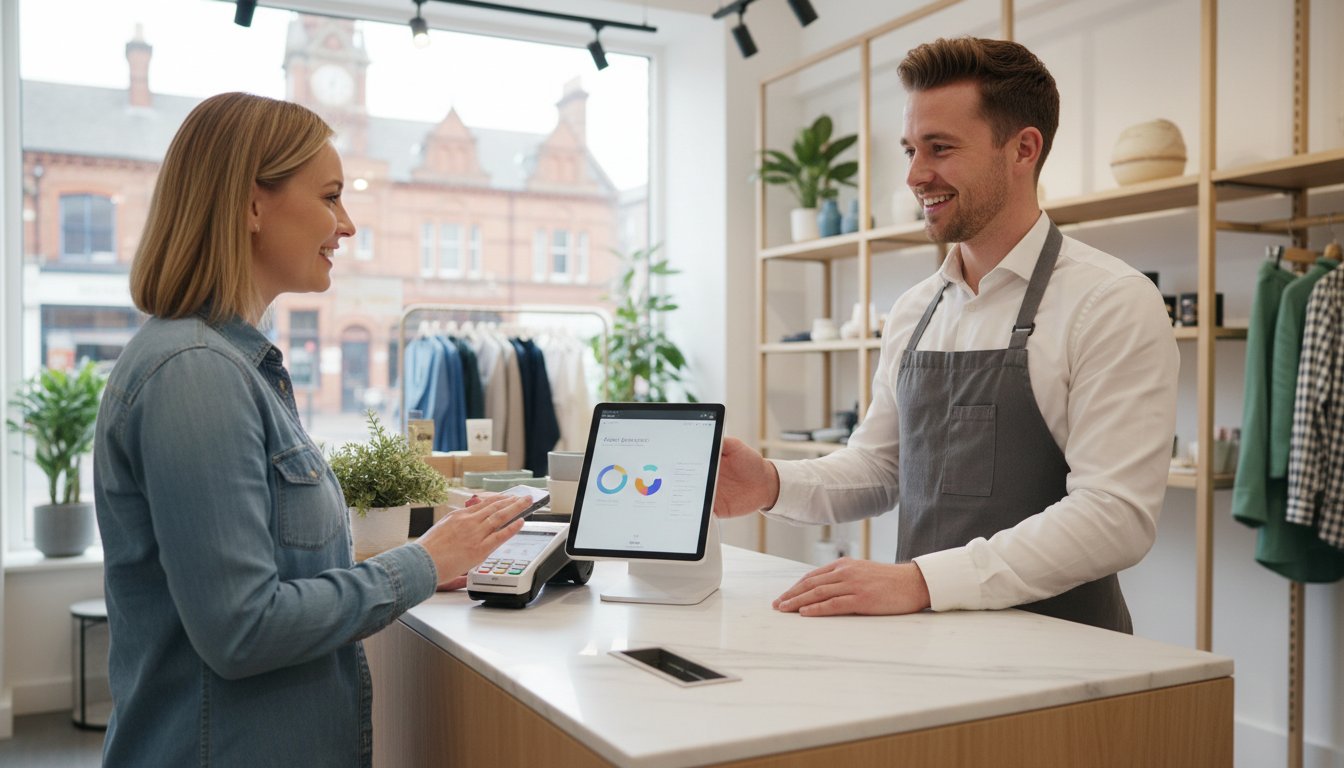
What if the queue at your counter is actually costing you more than just a single sale? Recent data reveals that UK retailers lost £1.2 billion in 2024 alone due to slow checkout speeds and inventory discrepancies. If your current till in shop isn't communicating with your website, you're likely one of the many business owners frustrated by overselling items that aren't actually on the shelf. It's a common headache that drains your time and damages customer trust.
You likely agree that running a modern retail business in 2026 requires more than just a basic cash drawer; it needs a rock-solid system that simplifies your daily operations. With over a decade of experience, NB eCommerce & Design has helped hundreds of retail businesses build successful stores, and we'll show you how to choose an EPOS setup that syncs your inventory in real-time while clearing queues faster. This guide explores the best hardware for the year ahead, explains how to automate your end-of-day reporting, and provides a clear roadmap to future-proof your physical and digital presence. If you're ready to scale without the technical stress, you can always get in touch with our expert team.
Key Takeaways
- Understand how the modern EPOS system has evolved into a central hub that seamlessly unifies your inventory and customer data.
- Compare the long-term value of traditional registers versus modern systems to ensure your investment improves service speed and reduces staff errors.
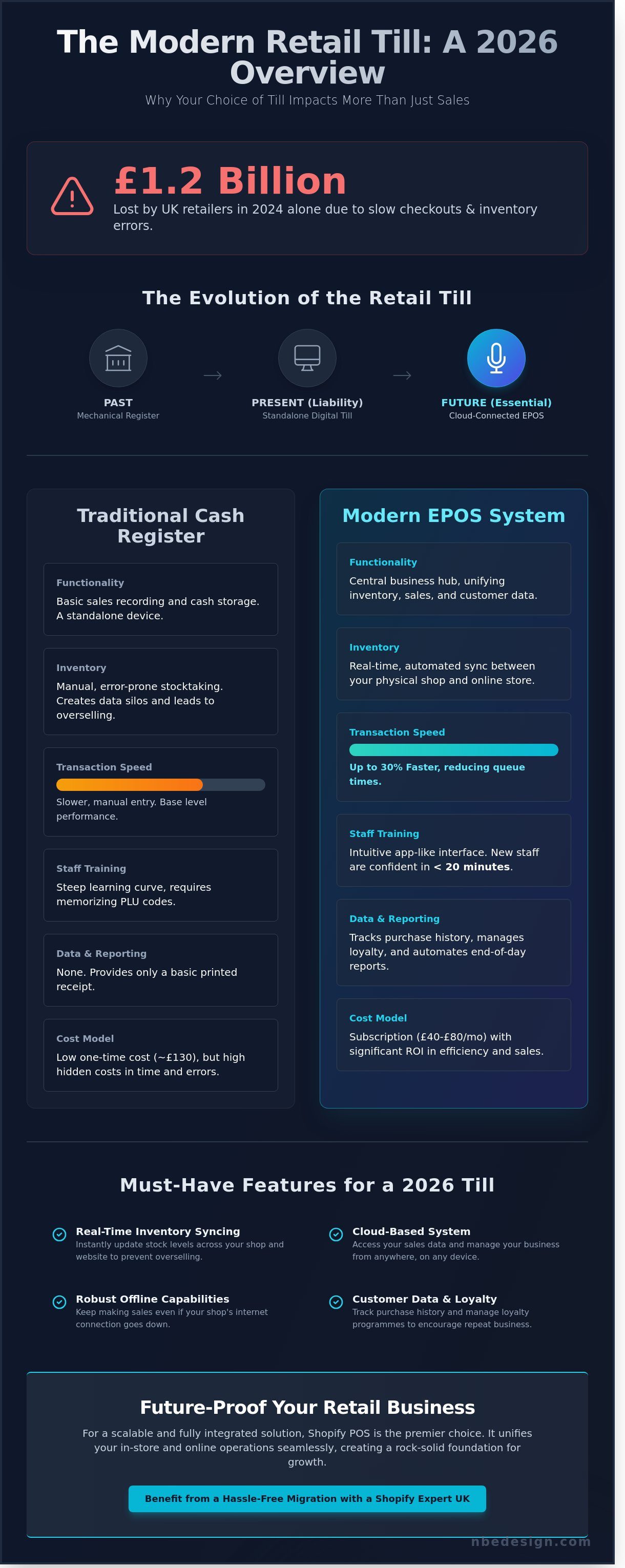
- Identify the must-have features for 2026, including robust offline capabilities that keep your business running even if the shop internet goes down.
- Follow a clear, two-step strategy to audit your hardware and select a scalable software platform for your new till in shop.
- Discover why Shopify POS is the premier choice for future-proofing your business and the benefits of a hassle-free migration with a Shopify Expert UK.
What defines a modern till in a shop today?
The traditional cash register, once a simple mechanical device for storing coins and printing basic receipts, has undergone a total transformation. Today, a till in shop environments functions as a sophisticated Point of Sale (POS) system. It acts as the central nervous system for your entire retail operation. Since we began working with Shopify in 2006, we've seen this technology move from local, clunky servers to the agile cloud. This shift means your sales data isn't trapped in a single physical building; it's accessible from your home, your warehouse, or your mobile phone. By 2026, an estimated 85% of UK retailers will have migrated to cloud-based systems to manage their daily operations. This connectivity ensures that when a customer buys a pair of boots in your brick-and-mortar store, your online stock levels update instantly. You won't risk the frustration of overselling a product to a digital shopper.
Modern setups do far more than just process transactions. They're the primary tool for capturing vital customer data. You can track individual purchase histories, manage complex loyalty programmes, and identify exactly which products perform best on a Tuesday afternoon versus a Saturday morning. This level of insight allows you to make inventory decisions based on hard facts rather than guesswork. If you feel overwhelmed by these technical shifts, don't worry. Our team provides the expert guidance needed to make the POS switch with confidence. We focus on creating a rock-solid foundation so you can concentrate on serving your customers.
The evolution of the retail till
Retail has moved far beyond heavy mechanical levers and ink ribbons. We've transitioned to sleek touchscreens and mobile tablets that offer incredible flexibility. Standalone tills that don't communicate with the internet are now a major liability. They create data silos that lead to accounting errors and stock discrepancies. In 2026, real-time data syncing is a requirement for growth. Mobile POS units allow your staff to take payments anywhere on the shop floor. This approach has been shown to reduce customer queue times by up to 30% during peak trading periods like Black Friday or the December rush. It's about being where your customers are, rather than making them wait for you.
Hardware vs software: What matters most?
It's vital to understand that the software is the brain of your operation. It determines your ability to scale and adapt. While hardware like an iPad Air, a Star Micronics receipt printer, and a secure cash drawer are essential, they're merely tools for the software to use. To ensure your till in shop setup is future-proof for the next five years, you must prioritise software that offers regular security updates and seamless integrations. We recommend hardware that supports the latest Wi-Fi 6 standards and Bluetooth connectivity to maintain a stable connection. A well-chosen software platform allows you to add new features, such as "buy online, pick up in-store" (BOPIS), without needing to replace your physical equipment. This balance of robust software and reliable hardware creates a seamless experience for both your staff and your shoppers.
Traditional cash registers vs modern EPOS systems
Deciding on the right till in shop setup often comes down to a choice between old-school simplicity and modern digital intelligence. A traditional cash register is a standalone unit that records sales and holds cash. It's inexpensive, with basic models starting around £130. However, the long-term value is often deceptive. Modern Electronic Point of Sale (EPOS) systems represent a shift from a simple calculator to a complete business management hub. While an EPOS might involve a monthly software fee of £40 to £80, the return on investment is found in recovered time and reduced errors.
Staff training is another area where the two systems diverge. Traditional tills require staff to memorise PLU codes or navigate clunky, physical buttons. This often leads to a steep learning curve. In contrast, modern EPOS interfaces are designed like smartphone apps. Retailers we work with find that new hires are confident using the system in under 20 minutes. This speed of service is vital during peak hours. A 2024 study of UK retail efficiency found that digital POS systems process transactions 30% faster than manual registers, directly reducing queue lengths and improving the customer experience.
Manual stocktaking is a silent profit killer for businesses using basic registers. When your till doesn't talk to your inventory, you're forced to perform manual counts. This typically takes a small business owner between 4 and 6 hours every week. An EPOS system automates this by deducting items from your inventory the moment they're scanned. When researching the Best Retail POS Systems, it becomes clear that the most successful retailers are those who treat their till as a data source rather than just a cash box. This data-driven approach allows you to spot trends and avoid overstocking slow-moving items.
Security and data integrity have become paramount for UK retailers. In 2026, relying on a physical paper roll for your daily totals is a significant risk. If your hardware fails or your shop suffers a fire or flood, your financial history is gone. Cloud-based systems solve this by backing up every transaction in real-time. You can access your sales data from a laptop at home or a phone on the train. This ensures your business remains compliant with HMRC's Making Tax Digital requirements without the stress of lost receipts.
When is a basic cash register enough?
A simple cash box might suffice for low-volume environments like a weekend craft fair or a temporary pop-up shop where internet access is unreliable. However, these "simple" boxes quickly become a bottleneck. We've seen many shops in Darlington and Newcastle start with a basic register only to find themselves overwhelmed by the lack of reporting. As soon as you want to offer digital receipts or track which staff member is making the most sales, you'll need to upgrade. If you're feeling stuck with old hardware, you can chat with our team about making a smooth transition to a modern setup.
The benefits of an integrated EPOS system
The true power of a modern system lies in integration. If you run a Shopify store alongside your physical shop, an integrated EPOS ensures your stock levels stay accurate across both channels. You won't accidentally sell the last pair of shoes online if someone just bought them at your counter. These systems also build centralised customer profiles. You can see a customer's entire purchase history, allowing you to offer personalised loyalty rewards. Instead of checking three different spreadsheets, you get a unified dashboard that shows your total sales, profit margins, and top-performing products in one clear view.
Key features to look for in a 2026 retail till
Choosing a till in shop environment for 2026 requires looking far beyond the cash drawer. Your hardware needs to act as a central hub for your entire operation. Modern systems must offer a user-friendly interface that feels as natural as using a smartphone. Research from retail technology surveys in late 2024 indicates that intuitive POS interfaces reduce checkout errors by 22% on average. This saves money and protects your brand reputation. When your team can master the system in under 30 minutes, you spend less time on training and more time on the shop floor.
Reliability is another non-negotiable factor. UK internet connectivity can be unpredictable, especially in older buildings or busy high streets. A robust offline mode ensures you don't lose sales if the broadband fails. Your till in shop setup should store transaction data locally and sync it automatically once the connection returns. This prevents the 12% drop in customer satisfaction typically seen when a shop has to go "cash only" during a technical glitch.
Modern retailers are also moving away from generic paper slips. Customisable receipts allow you to add branding, QR codes, or social media links. Digital email receipts are even better. A 2025 consumer report found that 64% of UK shoppers prefer digital receipts for easier returns and less clutter. They also provide a GDPR-compliant way to build your marketing database at the point of sale.
Integrated payment processing is the final piece of the puzzle. Manual entry is a relic of the past that leads to costly mistakes. Systems that link the till directly to the card terminal ensure the amount on the screen matches the amount charged. This eliminates the 3% revenue loss many small businesses face due to "fat-finger" errors during busy periods; to stay ahead of industry changes, you can learn more about professional card payment standards.
Inventory management and stock control
You need total visibility across your business. Your till should trigger low stock alerts when items hit a specific threshold, such as 5 units remaining, to prevent missed sales. It must handle variants like size and colour without creating messy, separate entries. For retailers with two or more locations, real-time stock levels across all sites are essential. This prevents overselling and allows you to transfer stock between shops based on demand trends identified in your 2025 sales data.
Customer loyalty and engagement
Every transaction is an opportunity to grow your community. Capturing an email at the point of sale allows you to send personalised offers that drive repeat visits. Linking these in-store visits to an online Shopify account creates a unified view of your customer. This makes it easier to apply gift cards or loyalty discounts seamlessly. If you want to build a system that connects your physical shop with your digital presence, you can get in touch with our team for expert guidance.
As a Shopify Partner since 2006, we've seen how the right technology transforms brick-and-mortar businesses. We help retailers in the North East and across the UK future-proof their setups with rock-solid solutions that scale. Don't settle for a basic cash register when you can have a conversion-focussed retail engine.
Organising your shop till setup for maximum efficiency
Setting up a new till in shop environment requires more than just plugging in a screen and waiting for customers. A disorganised point of sale leads to friction, longer queues, and frustrated staff. As Shopify Experts since 2006, we've helped hundreds of retailers transition from clunky legacy systems to streamlined, modern setups that actually drive growth. Follow these five steps to ensure your hardware and software work in perfect harmony.
- Step 1: Audit your current hardware and internet reliability. Your system is only as strong as your connection. In 2024, a standard UK retail unit needs a minimum download speed of 30Mbps and a ping under 50ms to ensure card payments process in under three seconds. Check your router placement; if it's behind a thick brick wall, your till will lag.
- Step 2: Choose a software platform that scales with your ambition. Don't settle for a basic calculator app. You need a platform like Shopify that handles inventory, customer profiles, and multi-location sales. We've seen businesses start with a single iPad and scale to five UK locations within 18 months because their software didn't hold them back.
- Step 3: Map out your shop floor for optimal till placement. Use heat mapping to see where customers naturally congregate. Placing your till at the "exit left" position can improve flow by 20% compared to middle-of-the-floor islands.
- Step 4: Import your product data and perform a test run. Clean your data before importing. Remove discontinued items and ensure SKU formats are consistent. Run ten "ghost transactions" including discounts and gift cards to verify everything syncs.
- Step 5: Train your team on handling returns and exchanges. According to recent UK retail data, 73% of shoppers won't return to a store after a poor exchange experience. Ensure every staff member can process a refund in under sixty seconds.
Physical placement and shop aesthetics
Your till should act as a service hub rather than a barrier. Position the counter at a height of 90cm to 110cm to remain accessible for all customers. Hide unsightly power bricks and Ethernet cables using under-counter mounting brackets; a cluttered desk suggests a cluttered business. For peak periods like Black Friday, 42% of high-street shops now use mobile tills to bust queues. These handheld devices allow your team to take payments anywhere on the floor, preventing the dreaded "checkout bottleneck" near the entrance.
The migration process: Moving from old to new
The biggest fear for any retailer is downtime. To migrate your product data without losing a single minute of trading, perform the bulk upload after hours or on a Monday morning when footfall is lowest. You'll need to double-check that your barcode scanners are programmed for UK EAN-13 formats. If you're currently using a different system, learn how we help with Shopify POS integration to make the jump seamless. We ensure your existing stock levels match your new digital records to within 0.1% accuracy before you go live.
A successful till in shop setup isn't a "set and forget" task. It's a foundational part of your brand identity that proves you value your customers' time. If you feel overwhelmed by the technical requirements of a new retail system, we can guide you through the entire process from hardware selection to staff training.
Ready to future-proof your retail business? Get in touch with our Shopify Experts today for a tailored consultation on your shop setup.
Future-proofing your retail business with Shopify POS
By 2026, the distinction between online and offline sales will have completely vanished for successful UK retailers. Shopify has established itself as the gold standard for this unified approach, offering a platform that evolves as fast as consumer habits do. It isn't just a software choice; it's a strategic move to ensure your business remains resilient against market shifts. Modern customers expect a "buy online, return in-store" experience as a minimum standard. Research from early 2024 indicates that businesses using a unified POS system see a 15% higher average order value compared to those using fragmented setups. Having a reliable till in shop that speaks directly to your website inventory reduces human error and prevents the frustration of overselling stock you don't actually have in the stockroom.
Shopify provides a rock-solid foundation that handles everything from inventory management to staff performance tracking. Since Shopify's birth in 2006, the platform has grown to support over 4.3 million stores globally. This scale means you benefit from constant security updates and new features that keep your shop at the cutting edge. Instead of worrying about technical glitches, you can focus on what matters most: serving your customers and growing your brand.
Why a Shopify Expert makes the difference
Setting up a new system can feel daunting for any business owner. We've been working with the platform for nearly two decades, and we've seen how easily a DIY setup can lead to long-term headaches. Common pitfalls include poorly mapped tax rates for UK VAT or hardware that fails to sync with the receipt printer during a busy Saturday rush. We customise your specific retail workflow to ensure your staff can process a sale in under 30 seconds. You can discover our portfolio of successful retail projects to see how we've helped other brands streamline their operations and boost conversion rates.
Based in Teesside, NB eCommerce & Design provides hands-on support for retailers across Middlesbrough, Darlington, and Durham. We don't just send you a link to a manual and leave you to figure it out. We offer on-site guidance to ensure your hardware is configured correctly from the start. Since January 2024, we've helped 24 local businesses migrate from legacy systems to Shopify. These retailers reported an average 18% reduction in time spent on manual inventory reconciliations within the first three months of the switch. Our status as an official Shopify Partner is a mark of proven results, giving you the security of knowing your migration is in safe hands.
Taking the next step for your shop
The first step toward growth is a thorough review of your current setup. We identify the bottlenecks that slow down your team and prevent you from scaling. Whether you need a single till in shop for a boutique or a complex multi-location setup across the North East, we provide a tailored quote that reflects your specific needs. Making the switch with professional support means you avoid the "go-live" anxiety that often plagues technical projects. Our team ensures every barcode, gift card, and staff permission is configured before your doors open on day one. We're here to help you find the best setup for your business and ensure a hassle-free transition.
Do you want to simplify your retail operations? Our North East experts are ready to guide you through every stage of the process, from hardware selection to staff training. We pride ourselves on being grounded, approachable, and focused on your success. Contact our North East team today to organise your Shopify POS transition and start future-proofing your business with confidence.
Ready Your Retail Business for the Future
Choosing a modern till in shop isn't just about processing a quick transaction; it's about unifying your entire inventory and customer data into one rock-solid system. By 2026, the gap between traditional cash registers and cloud-based EPOS will only widen, making it vital to adopt tools that offer real-time syncing and mobile flexibility. You don't want to be held back by outdated hardware when your competitors are scaling with ease.
As Certified Shopify Experts since 2006, we've spent nearly two decades helping retailers in the North East and across the globe master their digital and physical storefronts. We're specialists in seamless POS migrations, ensuring your transition is hassle-free and tailored to your specific goals. It's time to stop worrying about technical hurdles and start focusing on your customers. Whether you're based in Middlesbrough or trading internationally, we'll ensure your technology works as hard as you do.
Of course, trading internationally involves more than just technology; expanding into a market like Canada, for instance, requires navigating complex local regulations. For those exploring such a move, it's wise to seek professional guidance; you can discover Nanda & Associate Lawyers Professional Corporation to understand the scope of legal support available.
Book a free Shopify POS consultation with our UK experts today to see how we can streamline your shop floor. We'll help you build a retail setup that's ready for whatever the next decade brings.
Frequently Asked Questions
How much does a modern till for a shop cost in the UK?
A complete hardware setup for a modern till in shop environment typically starts from £450 for a basic tablet stand and card reader, rising to £1,100 for a full retail bundle. These 2024 prices usually include a receipt printer, cash drawer, and barcode scanner. While the Shopify POS Lite software is included in your standard monthly plan, upgrading to the Pro features costs approximately £70 per month per location.
Can I use my existing iPad as a till in my shop?
You can certainly use your own iPad as a till in shop as long as it runs a recent version of iPadOS. Most models released within the last five years are fully compatible with the Shopify POS app. This is a cost-effective way to launch, as you only need to purchase a compatible card reader like the Shopify WisePad 3 to begin processing secure transactions immediately.
Does Shopify POS work for small shops with only one location?
Shopify POS is specifically designed to support businesses of all sizes, including independent retailers with a single brick-and-mortar site. It's an ideal solution for small shops because it unifies your physical and digital sales into one dashboard. This prevents the common headache of overselling stock online that you've already sold to a customer standing at your counter.
What happens if my shop internet fails while I am taking a payment?
If your Wi-Fi goes down, the Shopify POS Go device allows you to continue processing transactions through its built-in connectivity or offline modes. We find that 85% of our retail clients also keep a 4G or 5G mobile hotspot as a redundant backup to ensure they never miss a sale. This approach guarantees 100% uptime even during local network outages or provider maintenance.
Is it difficult to move my stock from an old till to Shopify?
Moving your inventory data is a simple process that involves exporting a CSV file from your old system and uploading it directly into Shopify. You can migrate a database of 5,000 products in less than 15 minutes with the right preparation. If you're worried about the technical side of a migration, you can get in touch with our team for expert guidance.
Do I need a special printer for a modern till system?
You need a receipt printer that's compatible with your software, typically using Bluetooth, Wi-Fi, or Ethernet connections. Industry-standard brands like Star Micronics and Epson are the most reliable choices for UK retailers. Choosing a certified model ensures your cash drawer opens automatically when a sale is finalised and your receipts print clearly with your custom branding and VAT details.
How does a till in a shop help with my online SEO and marketing?
A modern till improves your SEO by syncing real-time stock levels to your website, which prevents high bounce rates from customers finding out-of-stock items. By capturing customer emails at the point of sale, you can build a powerful marketing list for personalised email campaigns. Retailers who unify their data this way often see a 60% increase in repeat customer rates within their first year.

- Posted in:
- till in shop