Skip to content
Finding the Right Shopify Developer in the UK: A Business Guide
-
2838 words · 14 min read

Your online store is more than just a website; it's the engine of your business. But when it's time to build, customise, or scale this crucial digital storefront, the search for the right technical partner can feel daunting. You're faced with a sea of options, confusing technical jargon, and the very real concern that a wrong choice could lead to spiralling costs and missed deadlines. That's why finding a trusted specialist eCommerce developer UK businesses can rely on is not just a task to be ticked off—it's a critical investment in your future growth.
For businesses looking to build out their own in-house team rather than outsourcing to a freelancer or agency, another effective strategy is to work with a specialist recruitment firm. For example, Elite Executive Recruitment Ltd is dedicated to connecting companies with exceptional eCommerce talent for permanent roles.
In this comprehensive guide from NB eCommerce & Design, we'll demystify the process. We will provide you with the clarity and confidence needed to vet, hire, and
Key Takeaways
- A top developer offers more than just coding; they provide a commercial focus on custom functionality, site performance, and conversions to drive real business growth.
- Decide confidently between a UK-based freelancer and an agency by clearly evaluating your project's complexity, required speed, and overall budget.
- Learn a step-by-step process for writing a clear project brief that attracts and helps you hire the perfect shopify developer uk for your specific needs.
- Understand why launching your store is just the beginning and how ongoing developer support is essential for long-term security, maintenance, and scaling your success.
What Does a Shopify Developer *Actually* Do?
When business owners start looking for a Shopify Expert, they often think the role is simply about choosing a nice theme and adding products. While that's a start, it barely scratches the surface of a true developer's capabilities. A theme configurer can set up a basic store, but a skilled Shopify developer builds a powerful, conversion-focussed engine for growth.
Their work goes far beyond aesthetics. A professional developer architects custom functionality, optimises your store for lightning-fast speed, and ensures a seamless user experience that turns browsers into buyers. They are technical problem-solvers who directly impact your sales and operational efficiency. While the specifics of what web development involves can be broad, a Shopify developer masters a specific set of powerful tools: Shopify’s own templating language (Liquid), JavaScript for rich user interfaces, and APIs to connect your store to other critical business systems.
Front-End vs. Back-End Development
Think of the front-end as your digital shop window. A front-end developer focuses on everything the customer sees and interacts with-the theme layout, branding, buttons, and mobile responsiveness. The back-end is the stockroom and the till; it manages inventory data, customer information, app integrations, and payment processing. A versatile shopify developer uk often has full-stack capabilities, handling both the visual polish and the complex logic that powers your business.
Common Tasks for a Shopify Developer
A developer's day-to-day work is focused on building and refining the technical foundations of your eCommerce business. Their expertise is crucial for retailers looking to scale and streamline their operations. Key responsibilities include:
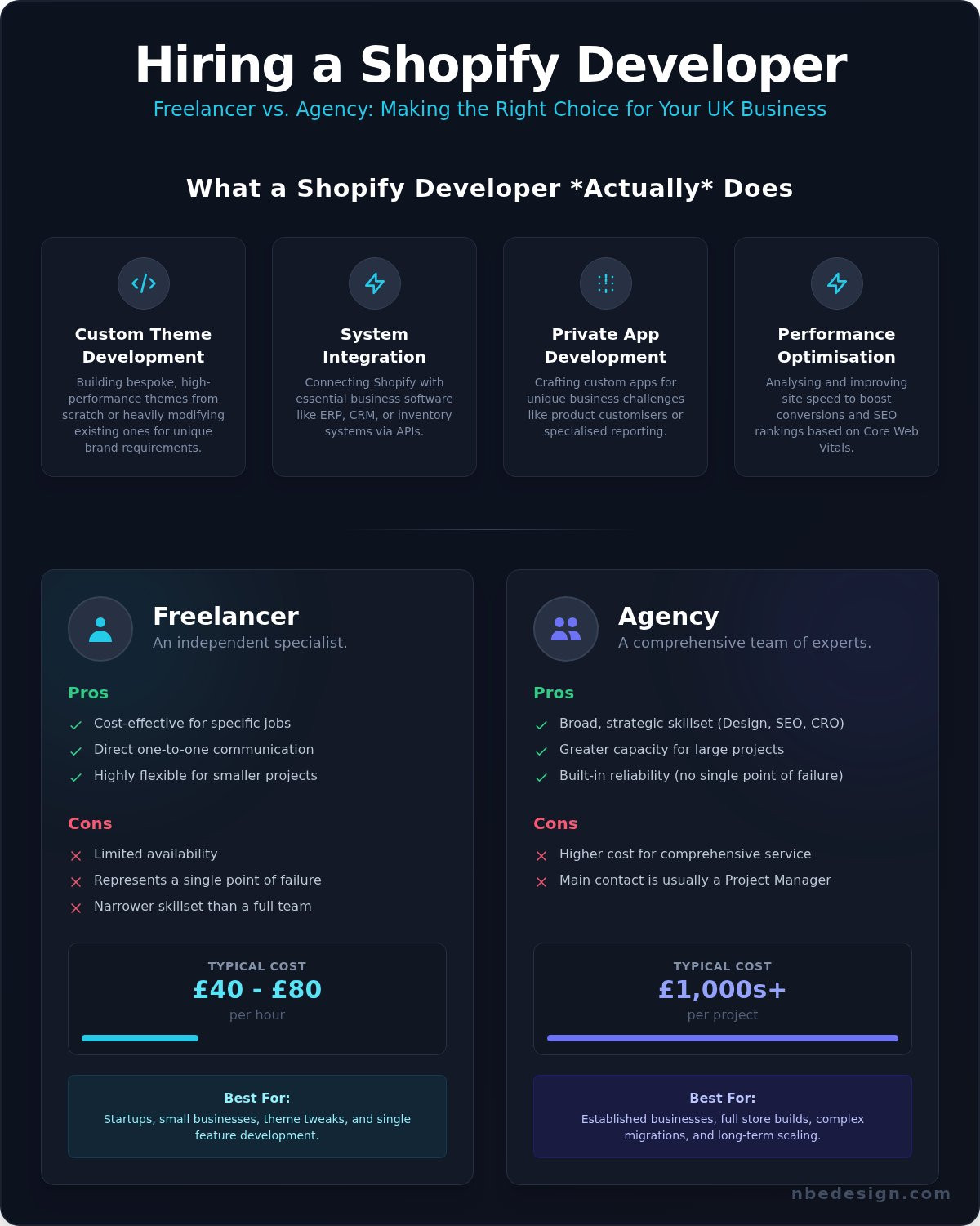
- Custom Theme Development: Building a bespoke, high-performance theme from the ground up or heavily modifying an existing one to meet unique brand and functionality requirements.
- Third-Party System Integration: Seamlessly connecting your Shopify store with essential business software like Enterprise Resource Planning (ERP), Customer Relationship Management (CRM), or bespoke inventory systems via APIs.
- Private App Development: Crafting custom Shopify apps to solve unique business challenges, such as complex product customisers, unique discount logic, or specialised reporting dashboards.
- Performance Optimisation: Analysing and improving site speed to meet Google's Core Web Vitals, ensuring a faster, more reliable experience for customers which directly boosts conversion rates and SEO rankings.
Freelancer vs. Agency: Which UK Partner is Right for Your Business?
When searching for a shopify developer uk, businesses have two primary paths: hiring a solo freelancer or engaging a full-service agency. The right decision isn't about which is 'better,' but which model aligns with your project's complexity, budget, and long-term growth ambitions. This choice will fundamentally shape your project's execution and outcome.
Let's break down the key differences to help you make a confident, strategic choice.
Hiring a Freelance Shopify Developer
A freelancer is an independent specialist you hire directly. This model is built on a one-to-one working relationship, offering agility and direct communication for focused tasks.
- Pros: Generally more cost-effective for specific jobs (with hourly rates often between £40-£80), you speak directly with the person doing the work, and they can be highly flexible for smaller projects.
- Cons: Availability can be limited as they juggle multiple clients, they represent a single point of failure (what happens if they're ill?), and their skillset is naturally narrower than a full team's.
- Best for: Small businesses, startups needing theme tweaks, bug fixes, or the development of a single, specific feature.
Partnering with a Shopify Agency
A Shopify agency provides a comprehensive team of experts. When you partner with an agency, you're not just hiring a developer; you're accessing a collective of specialists in design, SEO, project management, and conversion rate optimisation.
- Pros: A broader, more strategic skillset to drive growth. A great agency invests in its team's essential digital skills, ensuring a future-proof solution. They offer greater capacity for large projects and built-in reliability with no single point of failure.
- Cons: This comprehensive service comes at a higher cost (project fees often start in the thousands of pounds), and your main point of contact will likely be a project manager rather than the developer themselves.
- Best for: Established businesses planning a full store build, a complex migration from another platform, or those looking for a long-term partner to help them scale.
Ultimately, whether you choose a freelancer or an agency, always verify their credentials. Look for official Shopify Partner or Shopify Expert status. This accreditation is your assurance that your chosen partner has a proven track record of delivering high-quality, conversion-focused results on the Shopify platform.
Essential Skills to Look For in a Top UK Shopify Developer
Hiring a Shopify developer in the UK goes far beyond finding someone who can simply write code. The best developers are strategic partners who understand that every line of code should serve a commercial purpose: to drive sales, improve customer experience, and grow your business. A technically proficient developer is essential, but a developer with a strong commercial mindset is a genuine asset. They don't just build what you ask for; they advise you on the best path to achieve your e-commerce goals.
To ensure you find a partner who can deliver tangible results, evaluate candidates on both their technical prowess and their business acumen. This balanced approach is the key to a successful and profitable collaboration.
Technical Expertise Checklist
A top-tier shopify developer uk will have a rock-solid technical foundation. While vetting candidates, ensure they have a proven track record in the following areas:
- Deep Knowledge of Liquid: Mastery of Shopify's templating language is non-negotiable. This allows for complete customisation of your theme, from product pages to the checkout experience.
- Shopify APIs & Modern Frameworks: Experience with the Shopify API is crucial for building custom app integrations and creating seamless connections with third-party systems like inventory management or marketing platforms.
- Platform-Specific SEO: They must understand the nuances of SEO for Shopify, including optimising collection pages, implementing structured data, and ensuring your theme is built for search engine visibility.
- Performance Optimisation: A fast website is vital for conversions. Look for expertise in image optimisation, code minification, and using speed testing tools to ensure a lightning-fast user experience.
Business and Communication Skills
Technical skills are only half the equation. A developer's ability to communicate, understand your market, and focus on results is what truly separates the experts from the amateurs.
- Clear Communication: Your developer should be a clear and proactive communicator. As Forbes highlights when discussing the process of vetting freelance developers, understanding their project management style is critical for a smooth partnership.
- UK E-commerce Acumen: Look for a partner who understands UK consumer behaviour, GDPR compliance, and local shipping and payment gateway preferences. This localised knowledge is invaluable.
- Conversion-Focused Portfolio: A great developer's portfolio isn't just a gallery of pretty websites; it's a collection of case studies demonstrating growth. They should be able to explain how their work led to increased conversion rates, higher average order values, or improved customer retention. To see what's possible, review a strong portfolio of Shopify expert work that showcases real-world results.
How to Vet and Hire Your Shopify Developer: A Step-by-Step Process
Finding the right developer is more than just a search; it's a structured process. A methodical approach ensures you partner with a professional who not only has the technical skills but also understands your business goals. This framework will help you navigate the hiring process with confidence, connecting you with the ideal shopify developer uk partner to drive your brand's growth online.
Step 1: Define Your Project and Write a Clear Brief
A detailed project brief is your most powerful tool. It acts as a filter, attracting serious, professional developers while deterring those who aren't a good fit. It also forces you to clarify your own vision, setting a rock-solid foundation for the project. Be sure to include:
- Your Goals: What does success look like? For example, "Increase mobile conversion rates by 15%" or "Seamlessly sync with our new inventory management system."
- Key Features: List non-negotiable functionality, such as custom product bundles, subscription services, or a specific third-party app integration.
- Budget & Timeline: Provide a realistic budget range (e.g., £5,000 - £10,000) and your desired launch window. Transparency here saves everyone time.
- Brand Assets: Mention any existing brand guidelines, logos, or design files the developer will need to work with.
Step 2: Shortlist Candidates and Review Portfolios
Begin your search on the official Shopify Partner Directory, a curated list of vetted professionals. As you review candidates, look beyond attractive designs. A strong portfolio showcases live websites that are fast, mobile-responsive, and easy to navigate. Prioritise developers with proven experience in your industry-whether that's fashion, food and drink, or B2B-as they will already understand your unique challenges and opportunities.
Step 3: The Interview and Final Decision
The discovery call is your chance to assess both technical expertise and communication style. Come prepared with specific questions about their process, how they handle feedback, and their approach to project management. Key questions include:
- How will you keep me updated on progress throughout the project?
- Can you describe your typical process for a project of this scale?
- What is your payment structure and what are the key milestones?
Always verify their credentials and ask for references. A legitimate Shopify Expert will be proud to share their official status and connect you with past clients. When you've found a partner who aligns with your vision and demonstrates true expertise, you're ready to build something great. If you're ready to proceed with a trusted, UK-based team, contact our team for a no-obligation chat.
Beyond the Build: Ongoing Support and Growth
Launching your Shopify store is a significant milestone, but it's the starting line, not the finish. The digital landscape is constantly evolving, and your eCommerce site must adapt to keep pace. A true partnership with your chosen shopify developer UK agency extends far beyond the initial build, focusing on maintaining performance, enhancing security, and strategically driving growth.
Maintenance and Support Retainers
Think of your Shopify store as a high-performance vehicle; it requires regular servicing to run smoothly and securely. A monthly support retainer provides this essential care, offering peace of mind and protecting your investment. Typically, a retainer includes:
- Proactive monitoring for uptime and performance issues.
- Timely implementation of theme and app updates.
- Swift bug fixes and troubleshooting.
- Security patching to protect against vulnerabilities.
- A set number of development hours for minor tweaks and improvements.
The cost of inaction can be severe, leading to broken functionality, poor customer experiences, security breaches, and ultimately, lost revenue. A rock-solid support plan is a non-negotiable for any serious online retailer.
Growing Your Store with a Development Partner
Once your store is stable and secure, the focus shifts to strategic growth. This is where an experienced development partner becomes an invaluable asset, helping you make data-driven decisions to increase profitability. This collaboration often involves Conversion Rate Optimisation (CRO), using A/B testing to refine everything from product page layouts to checkout processes for maximum sales.
As your business scales, your needs will evolve. Your developer can implement new features, integrate custom apps, and streamline workflows. A crucial step for many UK retailers is unifying their online and offline operations. By integrating the best POS systems for UK shops with your Shopify backend, you can seamlessly sync inventory, customer data, and sales, creating a true omnichannel experience. This strategic alignment is key to future-proofing your retail business.
Partnering for Growth: Your Next Steps in Shopify Development
Choosing the right development partner is more than a technical decision; it's a strategic investment in your business's future. It requires understanding the role, vetting essential skills, and planning for long-term growth beyond the initial build. Finding a dedicated shopify developer uk who understands the nuances of the local market is the key to unlocking your store's full potential and building a rock-solid foundation for success.
As a Certified Shopify Partner Agency based in the North East, we have a proven track record of helping retailers across the entire UK grow their sales. We combine deep technical expertise with a genuine understanding of the retail landscape to craft eCommerce solutions that are not just beautiful, but are built to convert and scale with your business.
Ready to simplify the process and move forward with confidence? Talk to a UK-based Shopify Expert about your project today. Let's build a future-proof online store together.
Frequently Asked Questions
How much does it cost to hire a Shopify developer in the UK?
The cost varies significantly based on project scope and developer experience. A small task might cost a few hundred pounds, while a full, bespoke store build can range from £5,000 to £25,000 or more. Reputable UK agencies often charge between £75 to £150 per hour. It's best to view this as an investment in a robust, conversion-focused platform. Always request a detailed quote outlining all deliverables to ensure clarity and avoid unexpected costs.
What's the difference between a Shopify Partner and a Shopify Expert?
A Shopify Partner is any agency or freelancer registered with Shopify to build stores and apps; it's the entry point to the ecosystem. A Shopify Expert, however, is a higher, vetted tier. These are established Shopify Partners with a proven track record of delivering high-quality stores and demonstrating exceptional skill and client success. When you work with an Expert, you're partnering with a team that Shopify has officially recognised for their quality and contribution to the platform.
How long does a typical Shopify store development project take?
Project timelines depend entirely on complexity. A store built using a pre-existing theme with minor customisations can take 4 to 6 weeks. A fully bespoke, custom-designed Shopify store with complex integrations will typically require 10 to 16 weeks or longer. A clear project brief and prompt feedback are crucial for maintaining momentum. We prioritise a streamlined process to ensure your store is launched efficiently without compromising on quality or performance.
Do I really need a UK-based developer for my project?
While you can work with developers globally, hiring a shopify developer uk based offers significant advantages. They operate in your time zone, ensuring seamless communication and support. More importantly, they have an intrinsic understanding of the UK market, including consumer behaviour, shipping carriers, and regulations like GDPR and VAT. This local expertise is invaluable for crafting an eCommerce experience that truly resonates with British customers and operates smoothly within the UK business landscape.
What information should I have ready before I contact a developer?
To ensure a productive first conversation, it's helpful to prepare a brief outline of your project. This should include your core business goals, who your target audience is, and a few examples of websites you admire. Also, consider a list of essential features (e.g., specific payment gateways, subscription models) and your approximate budget and timeline. This information allows a developer to quickly understand your vision and provide a more accurate, tailored proposal for your business.
Can a developer help me migrate from another platform like WooCommerce or Magento?
Absolutely. Platform migration is a core service for experienced Shopify developers. A skilled team can manage the entire process, from transferring products, customers, and order data to preserving your valuable SEO rankings with a careful redirect strategy. We understand that moving your store can feel daunting, but with a proven process, we ensure a seamless and hassle-free transition from platforms like WooCommerce or Magento to a powerful, future-proof Shopify setup.

- Posted in:
- eCommerce Development
- eCommerce Guide
- Hire Shopify Developer
- Shopify
- Shopify Agency
- shopify developer uk
- Shopify Freelancer
- Shopify UK