Skip to content
How to Choose the Best POS System for Your Retail Store
-
3053 words · 15 min read
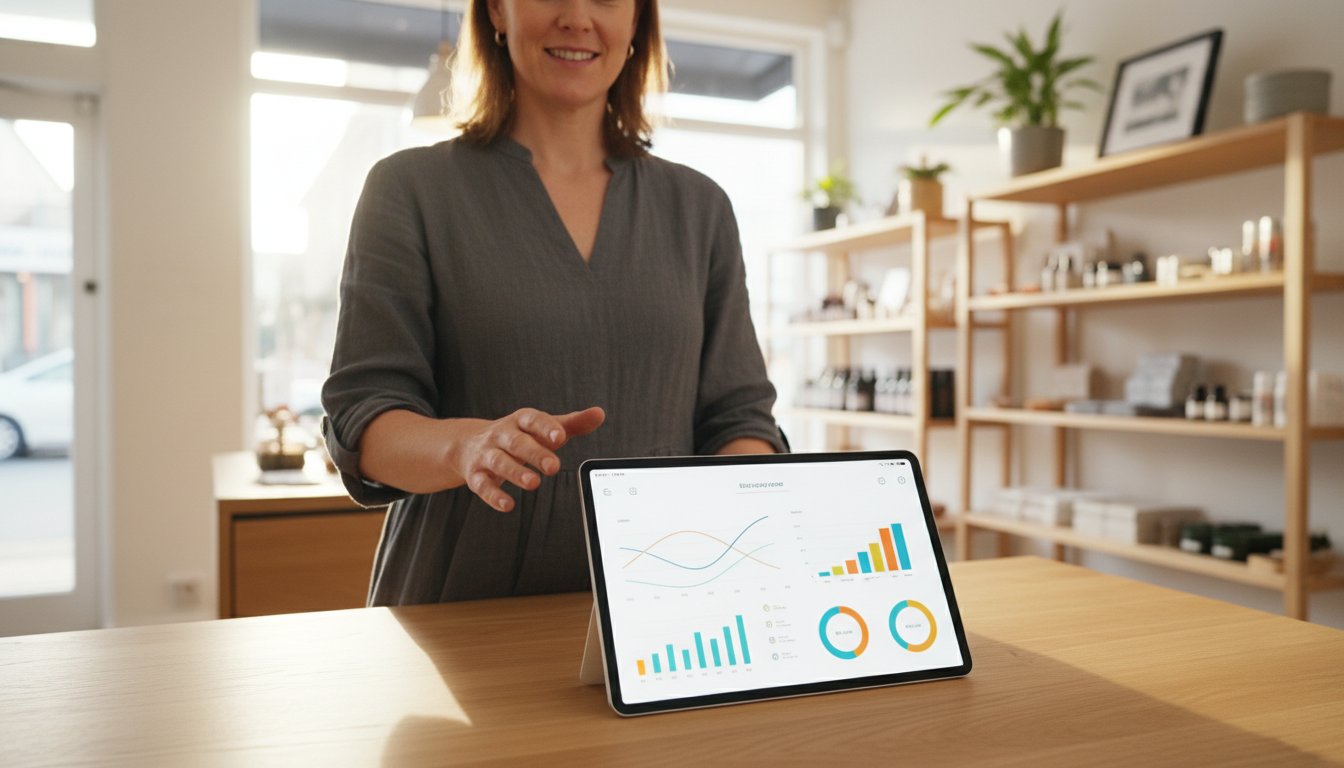
Is your in-store stock count constantly at odds with your online inventory? Are you battling a slow till system that frustrates staff and creates queues at checkout? For many UK retailers, these daily challenges are a clear sign that their current setup is holding them back. The process of choosing a new pos for retail store can feel overwhelming, packed with technical jargon and complex choices. But getting it right is fundamental to streamlining your operations and unlocking real growth.
As Shopify Experts, we understand that a great point-of-sale system is more than just a till-it’s the heart of your business. This guide is designed to give you clarity and confidence. We will break down the essential features every modern retail POS needs, from unified inventory management to insightful sales analytics. By the end, you'll be equipped to choose a system that not only creates a seamless experience for your customers but also provides a future-proof platform to scale your business.
Key Takeaways
- Understand why a modern POS is more than a till-it's the central hub that connects your inventory, sales, and customer data.
- Discover the non-negotiable features every pos for retail store must have to streamline operations and support future growth.
- Learn how unifying your in-store and online sales channels is the key to providing a seamless customer experience and boosting efficiency.
- Gain a clear, step-by-step plan for implementing a new system, turning a potentially daunting task into a confident business upgrade.
What is a Modern Retail POS? (And Why It's More Than a Cash Till)
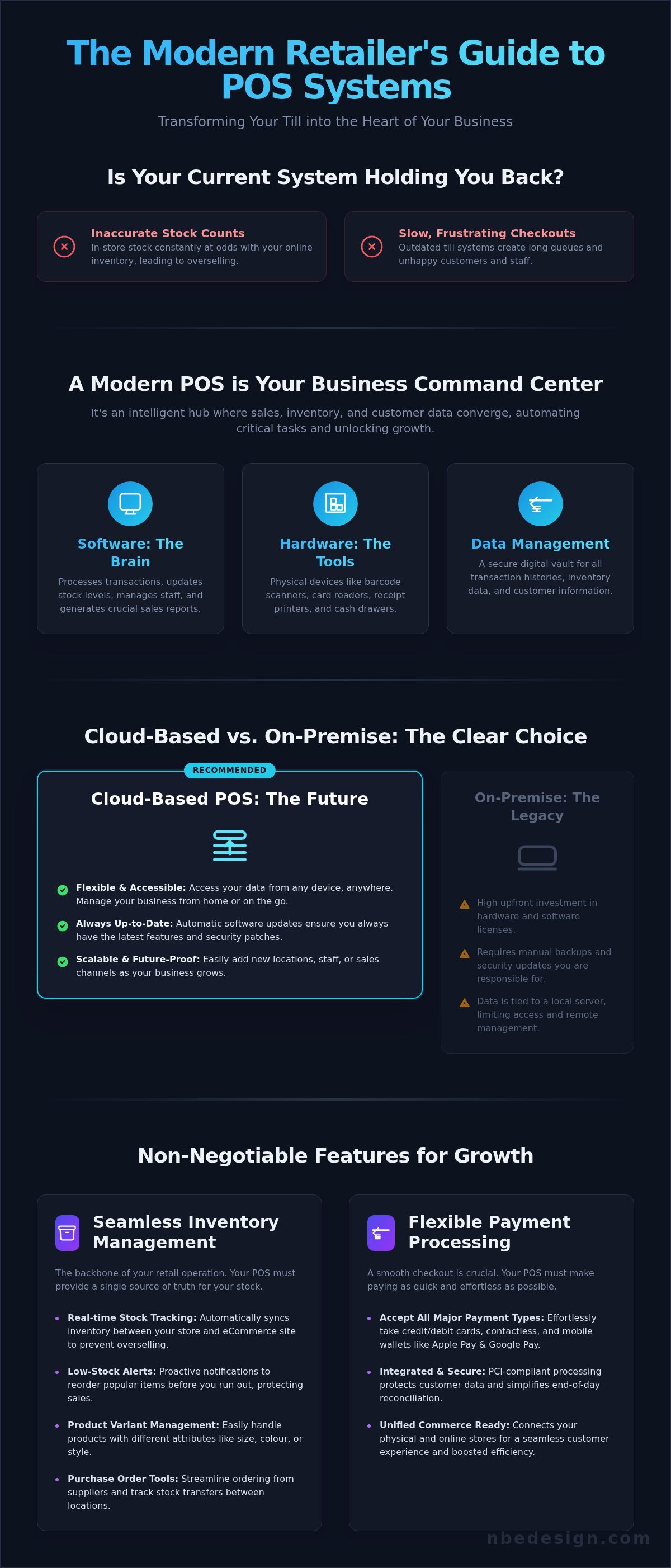
When you hear the term "Point of Sale," you might picture a simple, clunky cash till. While that was once true, the modern retail POS system has evolved into something far more powerful. Today, it’s the central command centre for your entire business, the place where sales, inventory, and customer data converge to give you a complete picture of your operations. When you ask, What is a POS system in today's market, the answer is a dynamic hub designed to streamline processes and drive growth.
A modern pos for retail store does much more than just process payments. It’s an intelligent system that tracks inventory in real-time across all your sales channels, manages customer information, and provides insightful reports on your best-selling products and busiest hours. By automating these critical tasks, the right POS system frees you up to focus on what truly matters: creating an exceptional customer experience and scaling your business.
The Core Components of a POS System
A complete POS solution is a combination of three key elements working in perfect harmony to make your retail life easier. Understanding these components helps you choose the best setup for your business needs.
- Software: This is the brain of the operation. Running on a computer, tablet, or even a smartphone, the software processes transactions, updates stock levels, manages staff permissions, and generates crucial sales reports.
- Hardware: These are the physical tools you and your staff use every day. This includes barcode scanners for quick product lookups, card readers for secure Chip & PIN and contactless payments, receipt printers, and a cash drawer.
- Data Management: This is the secure digital filing cabinet that stores every piece of information, from transaction histories and inventory data to customer contact details, ensuring it is both safe and accessible when you need it.
Cloud-Based vs. On-Premise: Which is Right for Retail?
One of the most important decisions you'll make is choosing between a cloud-based or an on-premise system. A cloud-based POS stores your data securely online, allowing you to access it from any device with an internet connection. This means you can check sales reports from home or manage stock during a trade show. It’s a flexible, scalable solution with automatic updates, making it the modern standard.
An on-premise system, by contrast, stores data on a local server within your shop. This traditional model often requires a significant upfront investment in hardware and software licences, plus the responsibility of manual backups and security updates. For the agility and future-proof reliability that today's retail environment demands, a cloud-based POS is the superior choice for nearly every business owner.
Key Features to Look For in a POS for Your Retail Store
Choosing a new Point of Sale system can feel daunting, but it becomes much simpler when you know what to look for. Think of this section as a checklist of non-negotiable features for any modern, growing retail business. The goal is to find a system that doesn't just process transactions, but actively streamlines your operations and fuels your growth. A truly effective pos for retail store handles these critical tasks seamlessly, freeing you up to focus on your customers and products.
Seamless Inventory Management
This is the backbone of your retail operation. Your POS must provide a single source of truth for your stock, eliminating guesswork and manual counts. It should offer a rock-solid foundation for managing your products efficiently, ensuring you have what customers want, when they want it.
- Real-time stock tracking: Automatically syncs inventory levels between your brick-and-mortar store and your eCommerce site to prevent overselling.
- Low-stock alerts: Proactive notifications help you reorder popular items before you run out, protecting you from lost sales.
- Product variant management: Easily handle products with different attributes like size, colour, or style from one central record.
- Purchase order tools: Streamline ordering from suppliers and track stock transfers between locations with ease.
Flexible Payment Processing
A smooth checkout is crucial for customer satisfaction. Your POS system must make paying as quick and effortless as possible, accepting the methods your customers prefer to use. An integrated solution, often powered by modern financial services like BounceMoney, reduces human error, speeds up queues, and provides the security that builds trust.
- Accept all major payment types: Effortlessly take credit/debit cards, contactless payments, and mobile wallets like Apple Pay and Google Pay.
- Integrated and secure: PCI-compliant processing protects sensitive customer data and simplifies end-of-day reconciliation.
- Customer-focused features: Offer popular options like split payments, digital and physical gift cards, and hassle-free returns processing.
Powerful Reporting and Analytics
Your POS system should be more than a digital till; it should be your business intelligence hub. The right data helps you move from reacting to the market to proactively shaping your strategy. Look for a system that turns raw sales numbers into actionable insights you can access from anywhere, at any time.
- Real-time sales reports: Track performance and access key metrics from any device, whether you're on the shop floor or at home.
- Actionable insights: Identify your best-selling products, busiest sales periods, and top-performing staff members to optimise operations.
- Simplified accounting: Generate end-of-day reports and track cash flow to make bookkeeping straightforward and accurate.
Integrated Customer Relationship Management (CRM)
The difference between a one-time sale and a loyal customer often comes down to the relationship you build. A great pos for retail store will have built-in CRM tools that help you understand and engage with your customers on a deeper level, encouraging repeat business and building a strong community around your brand.
- Customer profiles: Create profiles to track purchase history, contact information, and personal preferences.
- Loyalty programs: Easily set up and manage reward schemes and offer targeted discounts to your best customers.
- Email capture: Grow your marketing list by capturing customer details at the point of sale for future campaigns.
The Power of Unified Commerce: Connecting Your Physical and Online Stores
In today's competitive market, your customers don't see your business as two separate entities-an online shop and a physical location. They see one brand, and they expect one seamless experience. This is the core of unified commerce: creating a single, cohesive ecosystem where your brick-and-mortar operations and your eCommerce platform work in perfect harmony. The right pos for retail store is the central hub that makes this powerful connection possible, moving beyond simple transactions to build a truly modern customer journey.
Customers now expect flexible options like buying online and collecting in-store (click-and-collect), or returning an online purchase at your physical counter. Without a unified system, these simple requests become logistical nightmares, leading to frustrated customers and stressed staff. A truly integrated platform provides a single source of truth for all your data, from inventory levels to customer profiles, preventing overselling and ensuring a consistent brand experience at every touchpoint.
Why Disconnected Systems Hurt Your Business
Juggling separate systems for your in-store and online sales creates friction that directly impacts your bottom line and customer satisfaction. This fragmented approach leads to significant operational challenges:
- Stock Discrepancies: Manual inventory updates are prone to human error, resulting in overselling popular items online or showing out-of-stock products that are actually on your shop floor.
- Inconsistent Customer Experience: Different pricing, promotions, or loyalty points between channels confuses and alienates customers, damaging brand trust.
- Siloed Customer Data: You can't see a customer's full purchase history, making it impossible to understand their true value or provide personalised service.
- Wasted Resources: Your team spends valuable time on manual data entry and reconciling reports instead of focusing on sales and business growth.
Benefits of a Single, Integrated Platform
Adopting an integrated pos for retail store that unifies your sales channels immediately streamlines your operations and unlocks new growth opportunities. This single platform becomes the rock-solid foundation of your business:
- Real-Time Inventory Sync: Stock levels are automatically updated across all channels the moment a sale is made, whether in-person or online.
- Effortless Omnichannel Features: Managing services like click-and-collect, in-store returns, and ship-from-store becomes simple and efficient.
- A 360-Degree Customer View: Gain a complete picture of every customer's interactions, allowing for targeted marketing and superior service.
- Streamlined Operations: Automating tasks saves significant time, reduces operational costs, and increases overall business efficiency.
Why Shopify POS is the Top Choice for Ambitious UK Retailers
While many systems bolt on eCommerce capabilities as an afterthought, this advanced solution was built for unified commerce from day one. This fundamental difference makes it the most powerful and intuitive pos for retail store owners who want to sell everywhere their customers are. If you already run an online store with a compatible platform, this POS is the native, seamless extension of your business into the physical world, eliminating the headaches of syncing separate platforms.
The system excels in all the key areas a modern retailer needs: robust inventory management, detailed customer profiles, and powerful analytics. But its true strength lies in how it brings every sales channel together into one cohesive, easy-to-manage ecosystem. It’s a solution designed not just for today's sales, but for future growth, whether you're running a single boutique or expanding to multiple locations across the UK.
One System for In-Store and Online Sales
Imagine managing your entire business from a single back-end. With this unified system, your products, inventory levels, customer data, and orders are all centralised. An item sold in your brick-and-mortar shop is instantly updated online, preventing overselling and streamlining your operations. This unified platform allows you to:
- Sell in-person, on your website, and across social media channels from one inventory.
- Effortlessly offer customer-friendly options like click-and-collect (local pickup) and local delivery.
- Gain a complete view of customer purchase history, both online and in-store.
It’s this level of integration that transforms how you operate. See how we've helped retailers like you unify their sales channels and simplify their workload.
Hardware and Software Built to Work Together
A great POS system must be reliable and easy for your staff to use. This system's software runs on familiar devices like
Making the Switch: How to Implement Your New POS System
You’ve seen the benefits and chosen the right pos for retail store success. Now comes the implementation-a step that can feel daunting for any busy business owner. The thought of migrating data, training staff, and potential downtime is enough to cause hesitation. However, with a clear, structured plan, the transition can be a smooth and disruption-free process that sets your business up for future growth.
Breaking the process down into manageable steps demystifies the entire project and puts you in control.
Planning Your POS Migration
A successful launch day doesn’t happen by accident; it’s the result of careful planning. A strategic approach ensures your team is confident, your data is secure, and your customers experience a seamless checkout from the very first transaction. Here are the critical steps for a smooth switchover:
- Audit and Export: Begin by auditing your current system to understand what data needs to move. Export crucial information, including product catalogues (with SKUs, prices, and inventory levels) and your customer database.
- Set a Timeline: Choose a typically quiet sales period for the final switch. This minimises risk and gives you and your team breathing room to adapt to the new system without the pressure of a major sales rush.
- Train Your Team: Your staff are on the front line. Schedule comprehensive training sessions well before the launch date. Allow them to practice processing sales, returns, and gift cards so they feel confident and capable from day one.
- Test Everything: Before you go live, run thorough tests. Process mock transactions, check that hardware like receipt printers and card readers are working perfectly, and confirm that inventory levels are syncing correctly.
The Value of Working with a Shopify POS Expert
The technical side of implementation—from network configuration to hardware setup and data security—often requires specialized IT knowledge. Partnering with an IT consulting firm can ensure a smooth rollout. For example, firms like Nanotek handle these complex migrations, providing the technical expertise needed for a stable and secure system.
While a well-structured plan is essential, you don’t have to manage the complexities alone. Partnering with an expert removes the technical burden and guarantees a professional setup tailored to your specific needs. An expert handles the intricate process of data migration, ensuring no customer or product information is lost. They will configure your hardware and software for optimal performance and provide dedicated training and ongoing support for your team. Ultimately, the greatest value is peace of mind-guaranteeing a stress-free transition by working with a certified Shopify Expert ensures your new system is a powerful asset from the moment it goes live.
Take the Next Step: Unify Your Retail Operations
Choosing a new point of sale system is a pivotal decision for any ambitious UK retailer. As we've explored, the right technology is no longer just about processing transactions; it's the central hub that unifies your online and in-store operations, streamlines inventory, and unlocks powerful customer insights for growth.
Making the switch can feel like a significant undertaking, but selecting the best pos for retail store is the foundational step towards future-proofing your business and scaling efficiently. You don't have to navigate this transition alone.
As UK-based, certified Shopify Experts and Partners, we specialise in helping retailers unify their sales channels. We're here to ensure your transition is seamless and successful. Ready to unify your retail? Contact our Shopify POS experts for a consultation and let's build a rock-solid foundation for your brand's growth, together.
Frequently Asked Questions About Retail POS Systems
How much does a POS system for a retail store typically cost?
The cost of a POS system in the UK is broken into two parts: software and hardware. Software is typically a monthly subscription, with plans like Shopify POS Lite included in a standard Shopify plan (starting from around £25/month). More advanced versions like Shopify POS Pro are an additional £69/month per location. Hardware is a one-time cost, ranging from a few hundred pounds for a simple card reader and tablet setup to several thousand for a complete, multi-station system.
Can I migrate my existing product and customer data to a new POS system?
Yes, absolutely. Migrating your data is a standard part of setting up a modern POS system. Most platforms, including Shopify, allow you to import product details, inventory levels, and customer lists using CSV files. While this can be a daunting task, a Shopify Expert can help manage the process to ensure the transition is seamless and error-free, getting your new system populated with accurate data from day one and streamlining the entire setup.
What kind of hardware will I need for my retail store's POS?
The essential hardware for a retail POS includes a main device like an iPad or computer, a card reader for processing chip & PIN and contactless payments, a barcode scanner for quick product lookups, and a cash drawer. A receipt printer is also standard. Your specific needs will determine the final setup; a pop-up shop might only need an iPad and a card reader, while a larger store will benefit from a full counter-top arrangement for a more efficient checkout process.
How long does it take to set up a new POS system?
The setup time can vary based on the complexity of your business. A basic software setup and hardware connection can often be completed in less than a day. The most time-consuming elements are typically migrating your product and customer data and training your staff. For a small to medium-sized retail store, a full implementation from start to finish usually takes anywhere from a few days to a week, ensuring everything is running smoothly for your launch.
Is Shopify POS suitable for a small retail business with only one location?
Shopify POS is an excellent choice for a single-location retail business. It's built to be scalable, meaning it works just as efficiently for a small boutique as it does for a multi-store enterprise. The Shopify POS Lite plan, included with every Shopify subscription, provides all the core features needed to manage sales, inventory, and customer data. This makes it a powerful and cost-effective pos for a retail store looking to build a rock-solid foundation for future growth.
What happens if my internet goes down? Can I still make sales?
Yes, you can. A key feature of robust systems like Shopify POS is an offline mode designed for exactly this situation. If your internet connection drops, you can continue to process transactions, including card payments. Once your connection is restored, the POS will automatically sync all the sales data that was recorded while you were offline. This future-proofs your sales process, ensuring you never miss a sale due to a temporary network outage.

- Posted in:
- Business Operations
- Inventory Management
- Point of Sale
- pos for retail store
- POS System
- Retail Technology
- Sales Analytics
- Shopify POS
- UK Retail