Skip to content

Shopify Development and Design Services in Newcastle
-
3072 words · 15 min read
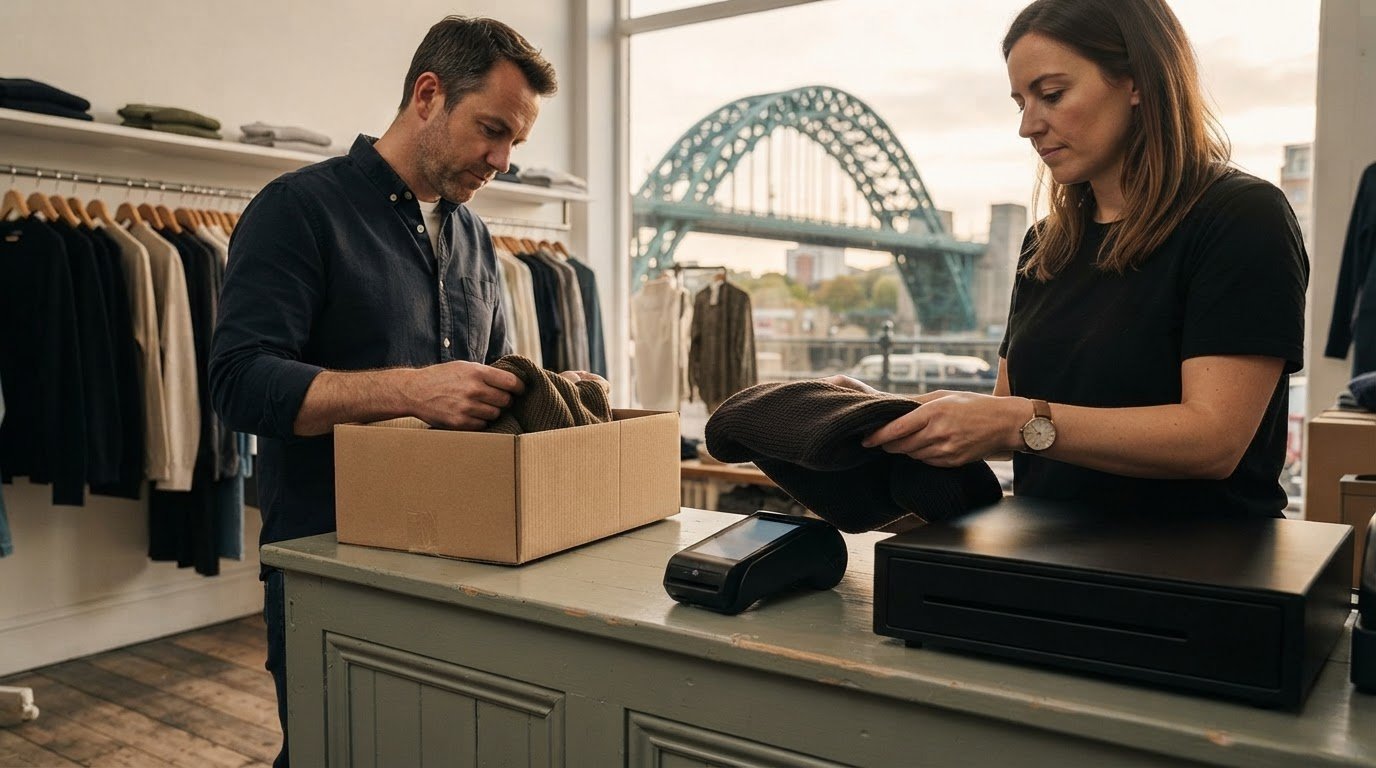
The best Shopify build isn’t chosen by postcode alone. Shopify developers in Newcastle can design and develop a new store, migrate an existing shop to Shopify, or connect online and in-store sales through Shopify POS. The right fit depends on your store’s requirements, the experience you need and how you want the work delivered.
It’s sensible to weigh up your options before committing: a freelancer, an agency and a contract developer can each suit different projects. A migration also needs careful planning, particularly around store data, customer experience and how your business operates across sales channels.
This guide explains the services Shopify developers offer, how common hiring arrangements compare and what to consider when planning a new build or migration. It also covers ongoing support and practical factors that can shape a successful project, so you can decide what your store needs next.
Key Takeaways
- Match the developer’s Shopify experience to your project, whether you’re building a store, migrating platforms or connecting online and in-store sales.
- Compare agency, freelance and contract arrangements by the skills, capacity and continuity your project needs.
- Plan a migration around store data, customer journeys and day-to-day retail operations to make the transition more manageable.
- Clarify what ongoing support should cover so your store can adapt as your business and requirements change.
- Check whether Newcastle-under-Lyme or Newcastle upon Tyne is the right location for your search, as they are different places.
Shopify Partner expertise and ongoing store support
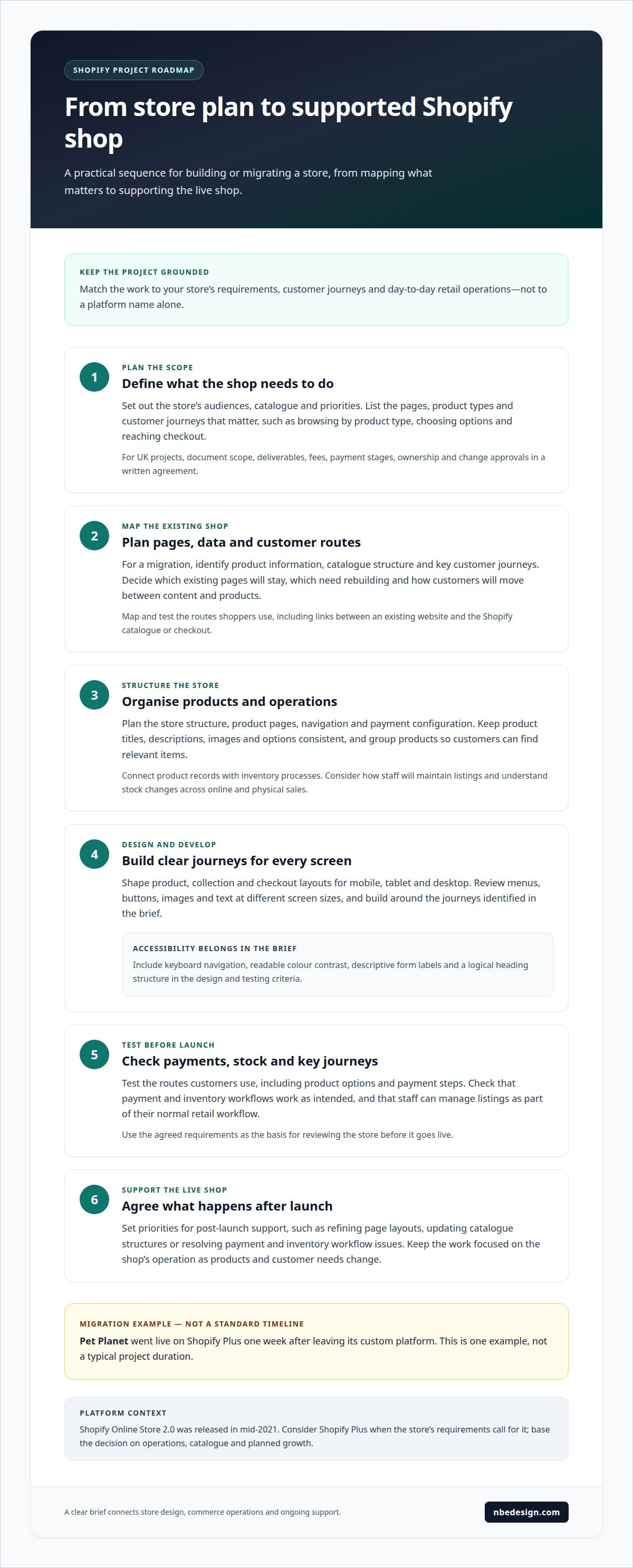
A capable Shopify specialist can connect store design, commerce operations and post-launch support. Assess their approach through practical steps: planning the build, organising products, testing payment and stock processes, then supporting the live shop.
Store Migration and Website Integration
A migration moves the working parts of an existing shop to Shopify, including product information, catalogue structure and key customer journeys. Planning also considers how the shop fits with an existing website, so customers can move between content and products without confusing navigation. Before launch, the developer maps these requirements and tests the routes shoppers use.
For example, a retailer might keep its existing informational pages while moving its product catalogue and checkout to Shopify. The project should identify which pages will stay, which need rebuilding and how links between them will work. Pet Planet went live on Shopify Plus one week after leaving its custom platform. That is one migration example, not a standard project timeline.
Shopify Platform Expertise
Shopify Online Store 2.0 was released in mid-2021. A developer familiar with its approach can structure store pages and sections around the retailer’s content, products and customer journeys. Shopify Plus is another platform option to consider when a business’s requirements call for it; the decision should reflect the store’s operations, catalogue and planned growth, rather than the platform name alone.
Ask how the developer will turn your requirements into a working Shopify store and what testing they’ll complete before launch. A project brief should identify the pages, product types and payment steps that matter most. These details help shape clear shopping journeys and give the business a sound basis for reviewing its conversion rate.
Store Setup, Catalogue and Back-End Management
Professional setup covers the store’s structure, product pages, navigation and payment configuration. Catalogue management means organising product details consistently, including titles, descriptions, images and options. For a retailer with a broad range, clear product groupings help customers find relevant items without needing to understand the stockroom’s internal systems.
Back-end planning also connects product records with inventory processes. A developer can organise stock information and configure the store around how the business manages products across online and physical sales. The practical test is whether staff can maintain accurate listings and understand stock changes as part of their normal retail workflow.
Ongoing Support After Launch
Support can help adapt the store as products, processes and customer needs change. Agree which post-launch tasks matter, such as refining page layouts, updating catalogue structures or resolving issues with payment and inventory workflows. Clear priorities keep support focused on the shop’s operation, rather than a loose list of unrelated changes.
Store design also connects with a retailer’s wider identity. Where a project needs aligned visual materials, business graphic design can complement the online presentation. Together, considered design, well-managed product data and a tested back end give retailers a practical foundation for ongoing store improvements.
Shopify development and design services in Newcastle
Shopify development can cover a new shop, a redesign or improvements to an existing platform. For UK projects, set out the scope, deliverables, fees, payment stages, ownership and change approvals in a written agreement. Include accessibility checks in the design and testing brief.
Shopify Design and Responsive Front-End Development
Responsive front-end development shapes how a Shopify store works across mobile, tablet and desktop screens. A designer can map a product page, collection page and checkout journey, then build layouts that keep navigation and product details clear at different screen sizes. Review how the finished design handles menus, buttons, images and text on each device.
Accessibility belongs in design decisions, not just a final review. Include keyboard navigation, readable colour contrast, descriptive form labels and a logical heading structure in the acceptance criteria. For example, customers should be able to identify product options and complete a payment journey without relying on colour alone.
Shopify and Shopify Plus Development
Shopify and Shopify Plus projects both need a clear fit between platform features and business requirements. A developer can shape the design, configure store functions and build custom Shopify elements where the standard setup doesn’t meet a specific need. The useful question is what the store must do, not which platform name sounds more advanced.
List the required customer journeys before development begins. A retailer might need customers to browse by product type, choose options and reach a straightforward checkout. The project can then connect each requirement to a page or function, with testing focused on those journeys before launch.
Website Design, Development and Redesign
A new Shopify website usually moves from discovery to structure, visual design, development and testing. During discovery, the developer defines the store’s audiences, catalogue and priorities. A product-led shop, for example, may need collection pages that help customers compare ranges, while a specialist retailer may need detailed information on individual products.
Redesign work starts by identifying what should change and what should remain familiar. The developer can review existing navigation, page layouts and customer journeys, then plan updates around the store’s goals. Keeping useful content and recognisable pathways in view helps avoid redesigning elements that already serve customers well.
Design also needs to work beyond the storefront. The platform should make it practical for staff to update content and products, while clear page structure helps customers find relevant information. A development brief can set out the pages, functions and content the team will need to manage after launch.
For a store design or redesign project, discuss your Shopify development requirements and outline the customer journeys, features and accessibility checks that matter to your business.
Agency, freelancer and contract developer comparisons
Choose a Shopify developer by matching project complexity, required skills and communication needs to the working arrangement. When reviewing portfolios and feedback, look for relevant ecommerce examples, specific client comments and evidence of how the work addressed a store’s needs.
Agency Experience and Team Communication
A development agency can bring design, development and project coordination together, which helps when a store needs several connected skills. Ask who will lead the work, handle technical decisions and keep your team updated. For example, a named project contact can organise product, design and launch questions across different specialists.
Compare the agency’s process with your project stages: discovery, design approval, development, testing and launch. A useful communication plan explains how decisions are recorded and how changes to a Shopify theme are managed. This matters when staff need to approve layouts while continuing to run day-to-day ecommerce operations.
Freelancers, Agencies and Marketplaces
A freelancer may suit a defined task, such as refining a product template or adjusting a Shopify theme. An agency may fit a broader build that combines design, development and project management. A contract developer can add specialist capacity for a particular phase, while a marketplace helps businesses find independent professionals with different portfolios and working styles.
Compare the actual delivery model, not just the label. Identify who owns communication, how work is reviewed and what happens when a task depends on another skill. For example, a solo developer may handle front-end changes directly, while a larger agency may divide design and coding between team members.
Local Agencies and In-Person Meetings
A Newcastle-based agency can make in-person planning practical when stakeholders need to review store structure, product ranges or retail workflows together. Nearby options across North East England may also work well if meetings can be arranged around project needs. Location is one factor, not a measure of development quality.
Decide whether face-to-face sessions will materially help your project. A retailer aligning online and physical stores might value a meeting to map staff workflows; a clearly scoped theme update may need less in-person coordination. Agree how decisions and follow-up actions will be documented, whether sessions happen in Newcastle or remotely.
Reviews and Portfolios
Use reviews to understand how a developer communicates, handles decisions and supports clients through delivery. Portfolio examples show the work itself: inspect product pages, navigation and mobile layouts, then consider whether they resemble your store’s catalogue or customer journeys. A polished homepage alone won’t show how well the full ecommerce experience works.
Look for context alongside visual examples. A portfolio should explain the brief, the developer’s role and the parts of the store they delivered. Shopify expert portfolio examples can help you assess design and development work, while client reviews offer a separate view of the working relationship. Together, these details make comparisons more grounded.
Hiring Shopify developers in Newcastle-under-Lyme
Newcastle-under-Lyme and Newcastle upon Tyne are different locations, so clarify which one you mean before discussing a Shopify project. The first is in Staffordshire; the second is in North East England. Although NB eCommerce & Design primarily serves North East England, we frequently assist businesses across the wider UK with remote eCommerce projects, ensuring location does not limit your access to specialist expertise.
Start with your project requirements, then decide how important a nearby developer is. A store build focused on design, catalogue structure and online checkout may be managed remotely if communication is clear. A retailer coordinating an existing shop with physical operations may value structured video calls and digital planning sessions to discuss stock processes, staff workflows and customer collection arrangements.
For a Newcastle-under-Lyme business, a useful first step is to share a concise project brief. Set out what the existing website does, which parts need replacing and what the new Shopify store must support. Include examples such as product variants, collection navigation, payment steps or links to existing business systems. This helps a developer identify the skills needed.
Location should not replace evidence of relevant Shopify capability. Review examples of comparable stores and ask how the developer would approach your specific requirements. For instance, a retailer with a large catalogue needs a different information structure from a business launching a small range. Discuss how the proposed design, development and testing stages will address those differences.
Consider how the project will connect with your current operations. If staff update product details or stock records, describe that process before development begins. If the existing website contains useful content, identify what should remain accessible after the move. A clear plan helps prevent important customer routes from being overlooked during the transition.
Agree practical working arrangements before work starts. Name the person responsible for decisions, explain how progress updates will be shared, and define how design approvals and requested changes will be handled. If remote collaboration tools and virtual workshops matter to your team, make their purpose clear, such as reviewing page layouts or mapping store workflows.
Use this sequence to narrow your choice: confirm the correct Newcastle location, define the project scope, assess relevant Shopify skills, review comparable work, then agree communication and delivery stages. This helps you choose a partner based on project fit, not an ambiguous place name. The key takeaway is simple: specify Newcastle-under-Lyme in your brief and explain the business outcomes your Shopify store must support.
Shopify developers Newcastle upon Tyne agencies and freelancers
In Newcastle upon Tyne, compare agencies and freelancers by the work your Shopify project actually needs. A new store requiring design, development and migration may need several skills; a focused theme adjustment may suit a narrower arrangement. Define the outcome first, then match the delivery team to the scope.
A local agency can coordinate design, development and project communication through one team. This can help if your brief includes connected tasks, such as rebuilding collection pages, refining product layouts and preparing a store launch. Ask how responsibilities are divided and who will gather decisions from your business.
A freelancer may offer direct communication with the person doing the development. That can make a clearly defined task easier to manage, such as adapting a Shopify theme for a particular product range. For broader projects, establish how design, technical work and testing will be covered if they require different skills.
Location can make in-person discussions convenient, but it shouldn’t be the only selection factor. A Newcastle upon Tyne retailer might prefer a meeting to map store operations or review designs together. Remote collaboration can also work when project decisions, feedback and approvals follow a clear process.
Compare proposals using the same project brief. Include the store’s purpose, key pages, product types, required integrations and launch expectations. Then assess how each agency or freelancer responds: do they explain their approach, identify dependencies and describe what they’ll deliver? Clear scope makes differences in proposed work easier to understand.
Review previous Shopify work for examples relevant to your shop. For example, a retailer with a detailed catalogue should look for clear product discovery, not just attractive homepages. A redesign brief should also consider how existing customer journeys and useful content will carry into the new experience.
Compare communication separately. Clarify who handles questions, how progress is reported and how feedback becomes approved changes. If several people in your business will review the work, agree who makes final decisions. That simple step helps prevent conflicting comments from delaying design and development.
For a first conversation, share the brief and ask for a practical outline of stages, responsibilities and deliverables. A useful proposal should connect each activity to a store requirement, rather than rely on general promises. Explore Shopify development expertise as you consider the skills and support your Newcastle store needs.
Choose the arrangement that best fits your project’s complexity, communication needs and required expertise. If your priorities include several connected workstreams, consider how the team will coordinate them. If your brief is tightly defined, focus on the specialist skills and delivery process needed to complete that specific task.
Once you’ve clarified your project scope, discuss your Shopify requirements and the store outcomes you want to achieve.
NB eCommerce & Design
NB eCommerce & Design helps retailers plan and deliver Shopify projects around their store’s requirements. Its Shopify Store Design & Development can support a new build or redesign, while Shopify migration services help businesses move an existing shop to Shopify. For retailers connecting online and physical operations, Shopify POS integration brings those channels together.
Turn to NB eCommerce & Design when you need experienced Shopify guidance to shape the project scope, develop the store or plan a migration. As a certified Shopify Partner and Expert, the company can help you consider how design, customer journeys and retail processes fit together, then identify the right next steps for your business.
To discuss your Shopify project, contact NB eCommerce & Design.
Set Your Shopify Project in Motion
The right next step is to turn your business priorities into a clear project brief. Note what customers need to do in your store, which parts of the current setup need attention and how online and in-store operations should work together. This gives Shopify developers in Newcastle a practical foundation for discussing the scope and approach with you.
Bring your questions about design, migration or store operations into that conversation. A focused discussion can help you decide what matters now and what can be planned for later, without losing sight of the customer experience or your team’s day-to-day needs.
Ready to discuss your plans? Talk through your Shopify project with NB eCommerce & Design. A considered first step can make the work ahead feel much clearer.
Frequently Asked Questions
What Shopify development services are available in Newcastle?
Retailers can get Shopify store design and development, migration support, and Shopify POS integration. These services suit different needs: a new retailer may need a complete storefront, while an established shop may need to move its catalogue from another platform. POS integration can connect online and physical retail operations, including inventory and customer profiles. Describe your current setup and intended outcome to identify the most relevant starting point.
Should I choose a Newcastle Shopify agency or a freelance developer?
Choose based on the range of skills and coordination your project needs. A freelancer may be a good fit for a clearly scoped task, such as adjusting a theme. An agency may suit a project combining design, development and migration. Before deciding, clarify who will manage communication, how decisions are approved and how related workstreams will be coordinated.
Can a Shopify developer in Newcastle design a website and migrate an existing store?
Yes. Shopify website design and migration can be planned together, so the new storefront and transferred store information are considered as one project. Migration support can cover data transfer, design and launch. For example, a retailer moving platforms can plan how product information and key customer routes will appear in the redesigned shop, rather than treating the transfer and storefront as unrelated tasks.
How can I contact a Shopify developer, and where does NB eCommerce & Design work?
NB eCommerce & Design is based in the North East of England and serves retailers in Newcastle and Darlington, as well as clients worldwide. For project enquiries, use the contact page to outline your store requirements and preferred location. Include whether you need a new Shopify build, a migration or help connecting online and in-store retail, so your enquiry provides useful context from the start.

- Posted in:
- e-commerce
- Newcastle
- online retail
- Shopify
- Shopify design
- shopify developers newcastle
- Shopify development
- Shopify migration
- Shopify POS