Skip to content
What Are Brand Guidelines? The Ultimate Guide for E-commerce Brands
-
2850 words · 14 min read
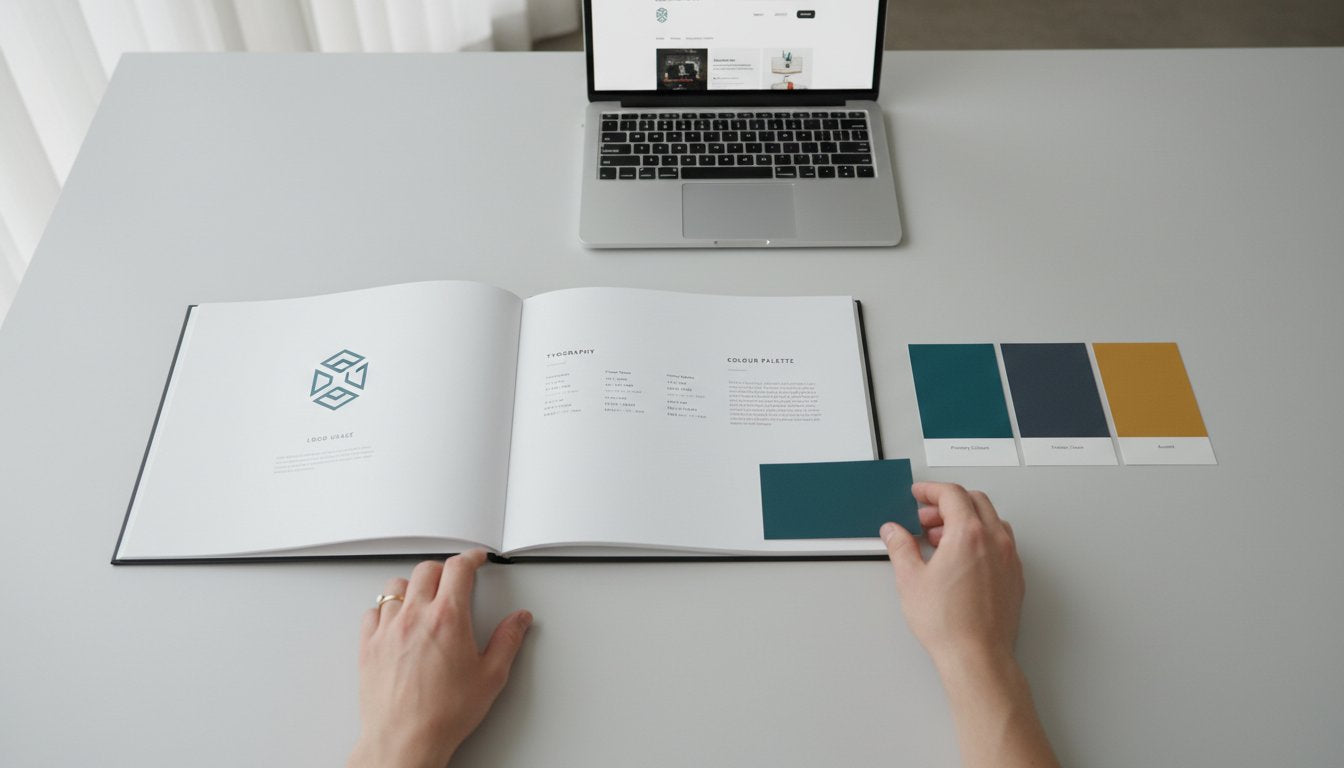
Wasting time and money on design revisions is a common frustration for growing e-commerce brands. One social media post uses the wrong shade of blue, a marketing email uses an off-brand font, and suddenly your business starts to look inconsistent and unprofessional. This lack of cohesion doesn't just look messy; it can erode the customer trust you've worked so hard to build. This is where a clear, comprehensive set of brand guidelines becomes one of the most valuable assets for your business, acting as the definitive rulebook for your visual and verbal identity.
For a tangible example, consider how a bespoke design company uses imagery to define its style. To see how visuals are curated to present a specific aesthetic, you can learn more about Modern Kitchens and observe how photography builds a consistent brand feel.
In this ultimate guide for e-commerce brands, we'll help you master this crucial tool. You will discover why brand guidelines are essential for consistency and growth, learn the key elements every powerful brand book must include, and get a clear roadmap to craft a document that streamlines your entire creative process. The result? You can delegate marketing tasks with confidence, build a rock-solid brand that customers recognise and trust, and ensure your business always looks its professional best across every channel.
Key Takeaways
- Discover how brand consistency builds the customer trust necessary to improve conversion rates and drive growth for your Shopify store.
- Get a comprehensive checklist of the essential elements every world-class set of brand guidelines must include, from logo usage to your unique tone of voice.
- Follow a clear, step-by-step process to craft your first brand book, breaking the project down into manageable tasks you can start today.
- Learn how to apply your guidelines across every part of your e-commerce business, from product pages to marketing emails, for a seamless customer experience.
First Principles: What Are Brand Guidelines (and What They’re Not?)
Think of your brand guidelines as the official rulebook for your company’s identity. It’s the single source of truth that defines how your brand looks, feels, and sounds in every situation. More than just a logo file and a colour palette, this document is a strategic tool designed to ensure rock-solid consistency across all your communications. Often referred to as a brand book or a corporate style guide, its primary purpose is to articulate your brand's core elements-from typography and imagery to tone of voice and mission-so that every interaction a customer has with you is cohesive and recognisable. It’s a living document, designed to evolve and scale right alongside your business.
The True Purpose of a Brand Book
A well-crafted brand book does more than just list rules; it empowers your entire organisation. It codifies your abstract brand identity, making it tangible and actionable for everyone from marketing to product development. This clarity equips employees, freelancers, and agency partners to represent your brand with confidence and accuracy. The result is a unified and seamless brand experience for your customers, building trust and recognition at every single touchpoint.
Common Misconceptions About Brand Guidelines
Several myths can prevent businesses from investing in this crucial asset. Let's clarify the reality:
- Myth: 'It’s just for designers.' In reality, it guides writers on tone of voice, marketers on campaign messaging, and sales teams on creating consistent presentations. It’s a company-wide resource.
- Myth: 'It stifles creativity.' The opposite is true. It provides a strategic framework that channels creativity effectively. By setting clear boundaries, it prevents off-brand work and encourages focused, consistent innovation.
- Myth: 'Only huge corporations need them.' For startups and growing eCommerce businesses in the UK, establishing guidelines early is essential for building a strong foundation. It ensures professionalism and brand recognition from day one.
The Business Case: Why Your E-commerce Store Needs Brand Guidelines
Investing in a professional logo is a crucial first step, but what happens next? For many growing e-commerce stores, the answer is often inconsistency across marketing channels, which can erode customer trust. This is where a rock-solid set of brand guidelines moves from a 'nice-to-have' to a critical business asset, delivering a tangible return on investment by creating a more professional, efficient, and scalable business.
Building Unshakeable Customer Trust and Recognition
Think of your favourite brands; you recognise them instantly. This isn't by chance. When a customer sees the same logo, colours, and messaging across your website, social media, and packaging, it builds a powerful sense of trust and reliability. This perceived stability makes them more likely to convert and, crucially, to become repeat customers. In a crowded online marketplace, a memorable and consistent brand identity is what separates fleeting interest from long-term loyalty.
Streamlining Your Marketing and Design Workflow
Are you tired of endless back-and-forth with designers over which font or colour hex code to use? Clear guidelines eliminate guesswork, saving you valuable time and agency fees. Instead of debating minor details, your team can focus on creating conversion-focused campaigns. As highlighted in a discussion by Forbes on brand consistency, having these standards in place is fundamental to efficient operations. This allows you to:
- Quickly create on-brand social media posts, ads, and email templates.
- Reduce revision rounds, saving hundreds of pounds in design costs annually.
- Ensure every piece of communication reinforces your professional brand identity.
Empowering Your Team and Partners as You Scale
As your business grows, so does your team. How do you ensure a new marketing hire or a freelance copywriter understands your brand’s voice from day one? Your brand guidelines are the playbook. This document empowers you to delegate tasks with confidence, knowing that your brand's integrity is protected whether you're onboarding new employees, briefing an agency, or expanding into new sales channels across the UK and beyond.
Anatomy of a World-Class Brand Guideline: Key Elements to Include
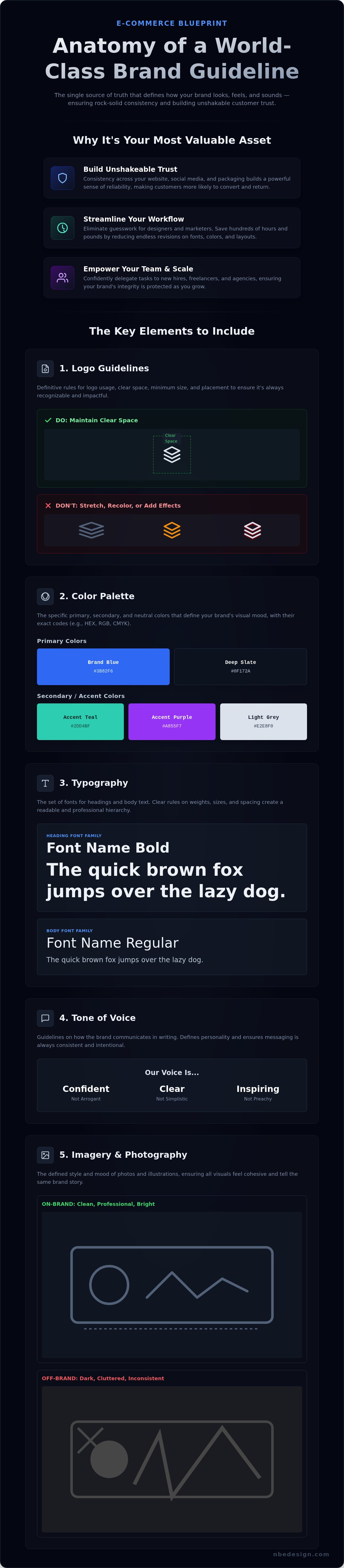
Think of your brand guidelines not as a restrictive set of rules, but as a strategic blueprint for your identity. This document is the single source of truth that empowers your team, freelancers, and partners to represent your brand accurately and effectively. It's the key to achieving the kind of brand consistency that builds recognition and trust with your audience. A world-class guide goes far beyond just a logo; it codifies your brand's very essence.
Brand Foundation: Mission, Vision, and Core Values
This is the soul of your brand. It outlines your 'why'-your mission (what you do), vision (where you're going), and core values (how you behave). Defining these elements, along with your target audience personas, ensures every decision, from marketing campaigns to customer service, is rooted in a clear and unified purpose.
For instance, a niche online store that curates The best LGBTQ+ e-books would build its entire brand foundation around values of inclusion, representation, and community, ensuring every brand touchpoint resonates powerfully with its specific audience.
Logo Usage: The Rules of Your Most Important Asset
Your logo is your most recognisable asset, and this section provides non-negotiable rules to protect its integrity. It must detail all approved logo variations (primary, secondary, icons) and strict guidelines on clear space, minimum size for legibility, and placement. Crucially, it should also feature a 'what not to do' gallery showing incorrect usage like stretching or re-colouring.
Colour Palette: Defining Your Brand's Vibe
Colour evokes emotion and sets the mood. Define your primary, secondary, and accent colours clearly. To ensure consistency across all mediums, provide exact codes for HEX, RGB (digital), CMYK, and Pantone (print). Including notes on accessible colour combinations demonstrates a modern commitment to inclusivity and usability for all users.
Typography: Establishing a Clear Visual Hierarchy
Typography gives your brand a consistent voice. Specify the typefaces for headings, subheadings, and body text. Go further by defining font weights (e.g., Bold, Regular), sizes, and spacing rules like leading (line height). For digital use, always include web font details and designated fallback fonts to maintain the experience across all devices.
Tone of Voice: Defining How Your Brand Speaks
If your brand were a person, how would it speak? This section defines its personality-be it witty, formal, or supportive. Provide a simple 'do and don't' list of words and phrases to guide writers. Including practical examples of how the tone adapts for a professional LinkedIn post versus a casual Instagram caption is essential for real-world application.
Imagery & Photography: Setting the Visual Mood
Your visuals communicate your brand's story instantly. This section sets the standard for all visual content, detailing the desired style for product photography (e.g., lighting, backgrounds) and lifestyle imagery (e.g., model casting, environment). It should also provide direction on the style of icons and illustrations to ensure a cohesive visual language.
How to Create Your First Brand Guidelines: A Step-by-Step Process
Creating your first brand guidelines can feel like a daunting task, but it’s a foundational project that ensures every part of your business communicates with a single, powerful voice. By breaking it down into a methodical process, you can streamline your efforts and build a resource that will serve your brand for years to come. Whether you tackle this in-house or with expert support, these steps will guide you to a successful outcome.
Step 1: Conduct a Brand Discovery & Audit
Before you can set rules, you need to understand what you're working with. Begin by auditing all your existing marketing materials-from your website to your social media posts-and identify any inconsistencies. This is also the time to solidify your core strategy: define your mission, pinpoint your ideal audience, and analyse your competitive positioning. To guide the visual direction, gather inspiration from brands you admire and compile a mood board that captures the look and feel you want to achieve.
Step 2: Define and Refine Your Visual Identity
With your strategic foundation in place, this is where your brand's visual elements are finalised. This includes your master logo and its variations, your primary and secondary colour palettes, and your chosen typography hierarchy. For each element, you must document the clear rules for usage as we outlined previously. Achieving a professional, cohesive, and impactful result at this stage is critical. Our business graphic design services specialise in crafting these rock-solid visual foundations for growing retailers.
Step 3: Compile and Design the Guideline Document
The final step is to bring all your hard work together into a single, accessible document. While a well-designed PDF is the traditional format, many brands now use private online hubs for easier access and updates. Organise all the elements logically, using clear headings and visual examples for every rule. Remember, the complete brand guidelines document is a reflection of your brand-it should be beautifully designed and easy to navigate. Need an expert touch to ensure your guide is both comprehensive and professional? Contact our Shopify experts to guide the process.
Putting It Into Practice: Applying Your Guidelines Across Your Business
You’ve invested time and resources into crafting a powerful brand identity. Now, you have a comprehensive document outlining your logo usage, colour palette, typography, and tone of voice. However, creating these brand guidelines is only the first step. The real value is unlocked through consistent, disciplined application across every single customer touchpoint. This is how you build a memorable, trustworthy, and professional brand experience.
To truly streamline this process, ensure this document is accessible to everyone who creates content for your business-from your in-house marketing team to freelance designers and copywriters. When everyone works from the same playbook, your brand presence becomes cohesive and rock-solid.
On Your Shopify Store: From Homepage to Checkout
Your eCommerce site is your digital flagship, and it must be a perfect reflection of your brand. Use your guidelines to direct every aspect of your Shopify theme customisation. This includes homepage banners, promotional pop-ups, and product page layouts. Ensure your primary and secondary colours are used correctly for buttons, links, and backgrounds, and that all text adheres to your chosen typography. For a clear look at how this consistency builds a powerful user experience, explore our portfolio of Shopify stores we've built for UK retailers.
In Your Marketing: Emails, Ads, and Social Media
Every marketing message you send is an opportunity to reinforce your brand identity. Create templates for your email campaigns in platforms like Klaviyo that are pre-loaded with your fonts, colours, and logo. For social media, ensure every graphic, video, and Story uses your approved visual assets. Beyond visuals, your tone of voice is critical. Your brand guidelines should dictate the language used in ad copy, social media captions, and customer service responses to ensure a consistent personality shines through.
Beyond Digital: Packaging, Invoices, and In-Store Experience
For retailers with a physical presence, brand consistency must bridge the gap between online and offline. Apply your branding to tangible assets like shipping boxes, packing slips, thank you cards, and product packaging. If you operate a brick-and-mortar shop, the in-store experience-from signage to staff uniforms-should feel like a natural extension of your website. This unified approach is essential for modern retail and is seamlessly managed with an integrated retail POS system that syncs with your online store.
Build a Lasting Brand with a Rock-Solid Foundation
As we've explored, brand guidelines are far more than a restrictive set of rules-they are the strategic blueprint for your e-commerce success. By establishing unwavering consistency across every channel, from your product pages to your social media, you empower your team and build lasting customer trust. A well-defined brand guide ensures every interaction is a deliberate step towards building a memorable brand identity that not only attracts customers but also fosters loyalty and drives sustainable growth.
Crafting your first comprehensive set of brand guidelines is a pivotal step, but you don't have to navigate it alone. As a Certified Shopify Select Partner based in the UK, we've been helping retailers build and scale powerful online brands since 2006. Our deep expertise, honed by working with a global client base, allows us to help you translate your vision into a practical, future-proof framework for your business.
Ready to build a powerful brand? Get in touch with our experts today.
Frequently Asked Questions
How much does it cost to create brand guidelines?
The cost varies significantly based on scope and detail. In the UK, a basic one-page guide from a freelance designer might start from £500. For a comprehensive document from a small agency, expect to invest between £2,000 and £5,000. A full brand identity project from a larger agency, which includes extensive guidelines, can easily exceed £10,000. This investment provides a rock-solid foundation for all your marketing and ensures consistency as you scale.
What's the difference between a style guide and brand guidelines?
Think of a style guide as a subset of brand guidelines. A style guide focuses purely on the visual identity: correct logo usage, colour palettes, typography, and imagery rules. Comprehensive brand guidelines, however, go deeper. They include the style guide but also define your brand's mission, values, personality, and tone of voice. They are the complete playbook for how your brand looks, feels, and communicates, ensuring total consistency across every touchpoint.
How long should a brand guideline document be?
The ideal length depends on your business's complexity. A startup can often establish powerful consistency with a concise 10-15 page document covering the core essentials. Larger organisations with multiple product lines and international markets may require a much more detailed guide of 50 pages or more. The goal is not length but clarity and usability; it should be comprehensive enough to answer any question about your brand’s application without being overwhelming for your team.
When is the right time for a startup to create brand guidelines?
The ideal time is right at the beginning, alongside your initial logo and identity design. Establishing these rules from day one prevents inconsistency as your team and marketing efforts grow. If you've already launched, the next best time is now, especially before a major marketing push, website redesign, or hiring new staff. Creating guidelines early is a future-proofing investment that ensures your brand message remains clear and professional as you begin to scale.
Can I create brand guidelines myself using a template?
While templates can be a starting point for a solo founder on a tight budget, they often lack strategic depth. A template helps you document rules, but a professional designer helps you define the *right* rules based on your unique strategy, audience, and goals. For a robust, effective guide that truly captures your brand’s essence and supports long-term growth, we strongly recommend partnering with an expert. This ensures your foundation is built on strategy, not just aesthetics.
Who in my company should have access to the brand guidelines?
Your brand guidelines should be easily accessible to everyone who creates communications for your company. This includes your internal marketing, sales, and design teams, as well as customer service representatives. It is also crucial to share them with any external partners, such as freelance designers, marketing agencies, and web developers. Making the document a central, accessible resource ensures everyone is working together to build a consistent and recognisable brand.

- Posted in:
- brand consistency
- brand guidelines
- brand identity
- branding
- e-commerce
- marketing
- style guide
- visual identity