Skip to content
Shopify Print on Demand: The Ultimate Guide to Starting Your Business
-
2821 words · 14 min read
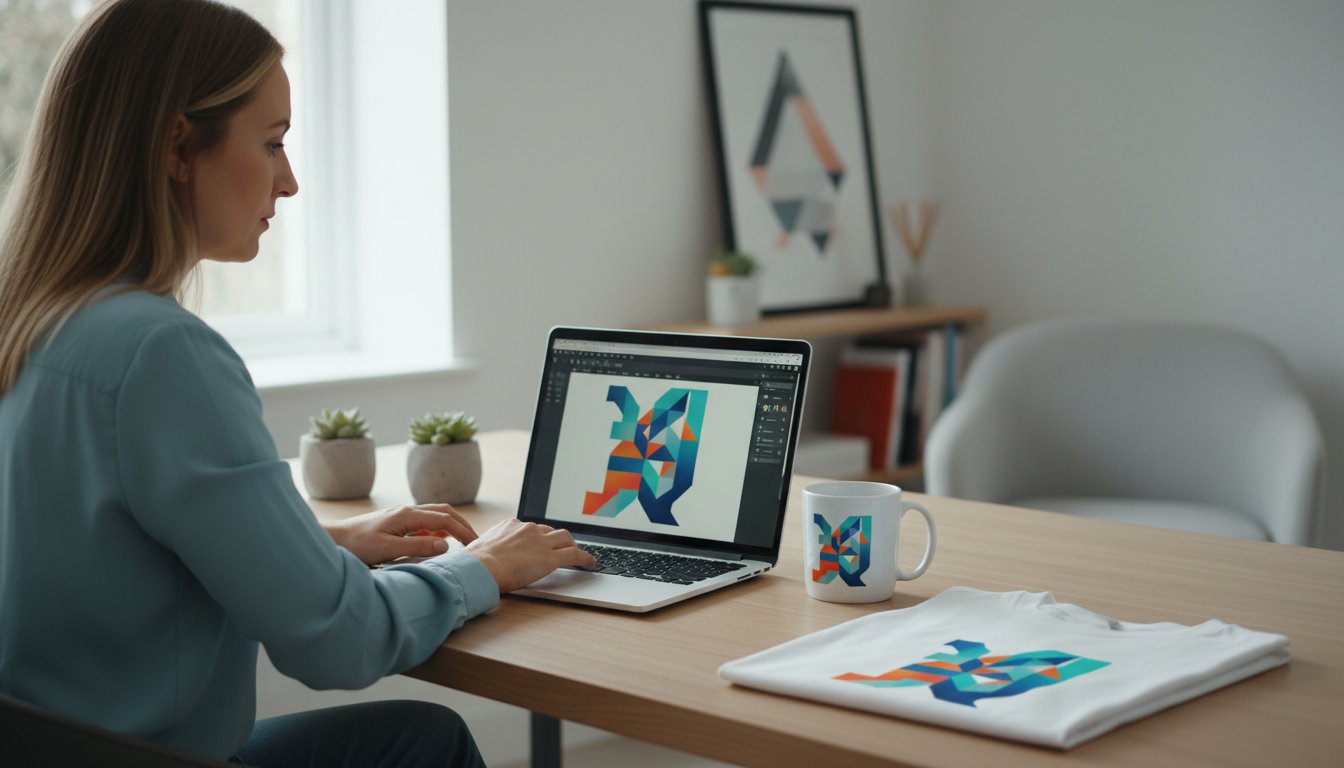
Have you ever dreamed of launching your own online brand, but the thought of investing thousands of pounds in stock, managing inventory, and handling shipping feels overwhelming? What if you could sell unique, custom-designed products without ever holding a single piece of inventory? This is the power of shopify print on demand, a business model that streamlines the path from a creative idea to a profitable online store with minimal financial risk.
For aspiring entrepreneurs in the UK, this model represents a low-risk, high-potential entry into eCommerce. However, navigating the landscape of different apps, ensuring product quality, and making that crucial first sale can still feel daunting. In this ultimate guide, we provide the clear, step-by-step plan you need. We will help you select the right print on demand partner, set up your Shopify store for success, and confidently launch your creative business. Your journey to selling custom designs online starts right here.
What is Print on Demand (and Why Pair it with Shopify)?
Starting an eCommerce business can feel daunting, especially when considering the significant upfront investment in stock. This is where a more modern, lower-risk model comes into play. At its core, Print on demand (POD) is an order fulfilment method where you sell custom-designed products that are only printed and shipped after a customer makes a purchase. Unlike traditional retail, there's no need to buy inventory in bulk, eliminating the financial risk of unsold goods. It's a specialised, more creative form of dropshipping where you control the product's design, not just its listing.
How the Print on Demand Model Works
The process is remarkably streamlined and efficient, allowing you to focus on what you do best: creating and marketing. The operational workflow is simple:
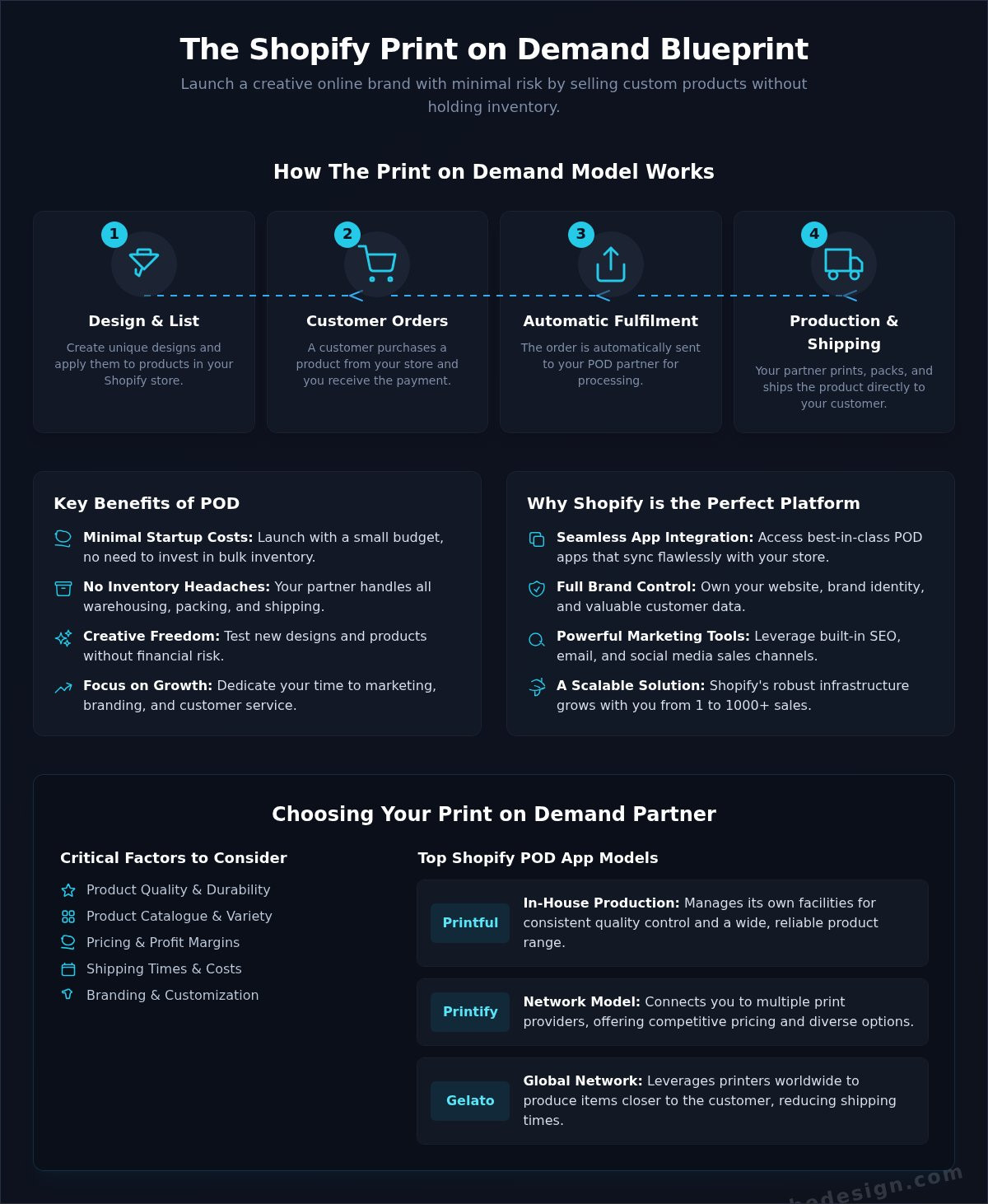
- Step 1: Design & List. You create your unique designs and apply them to products (like t-shirts, mugs, or posters) from a POD supplier's catalogue, then list them for sale on your Shopify store.
- Step 2: Customer Orders. A customer visits your store, loves your design, and purchases the product. You receive the payment directly.
- Step 3: Automatic Fulfilment. The order is automatically forwarded to your integrated POD partner.
- Step 4: Production & Shipping. Your partner prints your design on the product, packs the order, and ships it directly to your customer under your brand.
Key Benefits for New Entrepreneurs
For aspiring business owners in the UK, the POD model removes many of the traditional barriers to entry. The advantages are clear and compelling:
- Minimal Startup Costs: With no need to invest thousands of pounds in inventory, you can launch your business with a much smaller budget.
- No Inventory Headaches: Forget about warehousing, stock management, packing, and shipping. Your POD partner handles all logistics.
- Creative Freedom: Test new designs, products, and niche markets without any financial risk. If a design doesn't sell, simply remove it from your store.
- Focus on Growth: You can dedicate your time and resources to building your brand, marketing your products, and connecting with customers.
Why Shopify is the Perfect Platform
While the POD model is powerful, pairing it with the right platform is critical for long-term success. A Shopify print on demand business is a rock-solid foundation for growth. Shopify is not just a storefront; it's a complete commerce ecosystem engineered to help you scale.
- Seamless App Integration: The Shopify App Store offers best-in-class POD apps that sync flawlessly with your store, automating the entire fulfilment process.
- Full Brand Control: Unlike selling on marketplaces, Shopify gives you complete ownership of your brand, your website, and your valuable customer data.
- Powerful Marketing Tools: Leverage built-in SEO features, email marketing integrations, and social media sales channels to reach your ideal customers.
- A Scalable Solution: From your first sale to your thousandth, Shopify's robust infrastructure grows with you, ensuring a reliable and professional customer experience.
How to Choose the Best Print on Demand App for Your Store
Navigating the Shopify App Store reveals a vast landscape of print on demand services, and selecting the right partner can feel daunting. The truth is, there is no single "best" app for every business. The ideal choice depends entirely on your specific goals, product niche, quality standards, and budget. Making a confident decision requires a methodical approach, ensuring the service you choose can effectively support and scale with your brand.
A successful shopify print on demand business is built on a reliable fulfilment partner. To help you streamline your evaluation, we've outlined the critical factors to consider.
Critical Factors for Comparing POD Services
Before committing to an app, it's essential to assess each service against these core benchmarks. A thorough review now will prevent logistical headaches and protect your brand's reputation in the future.
- Product Quality: This is non-negotiable. The quality of the final product directly reflects on your brand. Always order samples of your potential best-sellers to inspect the print clarity, material feel, and overall durability before listing them on your store.
- Product Catalogue: Does the provider offer products that align with your niche and brand vision? A t-shirt brand has different needs than a store selling custom art prints or embroidered hats. Ensure their catalogue has the depth and variety you need.
- Pricing & Profit Margins: Carefully analyse the base cost of each product, shipping fees, and any potential monthly subscriptions. Understanding the economics of your chosen platform for print-on-demand-clothing is fundamental to ensuring your business model is profitable and sustainable. Calculate your potential profit margin (e.g., Sale Price - Base Cost - Shipping = Profit) for key items.
- Shipping Times & Costs: In today's market, customers expect fast and affordable shipping. Check the provider's average production times and their shipping rates to the UK. Long fulfilment delays can lead to poor reviews and lost customers.
A Quick Look at Top Shopify POD Apps
The POD landscape includes direct providers who manage their own facilities and network models that connect you to various printers. For instance, Printful is known for its consistent quality control and wide product range, as it handles production in-house. In contrast, Printify operates as a network, giving you access to multiple print providers, which can lead to more competitive pricing. For businesses with a global audience, Gelato leverages a vast network of printers to produce items closer to the end customer, reducing shipping times and costs. Don't forget to explore niche specialists, such as UK-based services like rawmerch.co.uk for custom apparel. To see how specialization can work in other markets, particularly with personal photo products, you can learn more about Nfoto, a successful Scandinavian provider.
Understanding Branding and Customisation Options
Your POD partner is an extension of your brand. Look for services that offer robust customisation to create a unique customer experience. Check for options like custom neck labels, personalised packing slips, and the ability to include "pack-ins" like flyers or thank-you cards. It is also crucial to understand how they handle customer service issues and returns. A partner with a clear and fair policy will help you maintain excellent relationships with your customers.
Step-by-Step: Launching Your First POD Product on Shopify
Transforming a great idea into a live product can feel daunting, but the shopify print on demand model simplifies the process significantly. This actionable roadmap breaks down the journey into four manageable stages, providing a clear and efficient path from concept to your very first sale. Think of this as your foundational launch plan.
Step 1: Choose Your Niche and Product
The key to standing out is not to sell to everyone, but to a specific, passionate audience. A well-defined niche-such as "eco-conscious yoga enthusiasts" or "fans of brutalist architecture"-allows you to create designs that truly resonate and makes your marketing efforts far more effective. Research popular trends on platforms like Etsy and Pinterest, but also look for underserved communities. To begin, focus your energy on a single signature product, like a premium organic cotton t-shirt or a ceramic mug, to master the process before expanding your catalogue.
Step 2: Set Up Your Shopify Store
With your niche decided, it's time to build your digital storefront. Start by selecting a Shopify plan (the Basic plan is an excellent starting point) and registering a professional domain name that reflects your brand. Next, choose a clean, mobile-friendly theme from the Shopify Theme Store; a visually appealing and easy-to-navigate site builds trust. Finally, configure your essential settings, including setting up Shopify Payments to accept credit cards and establishing clear shipping and return policies for your UK customers.
Step 3: Create Your Designs
Your designs are the heart of your brand. Technically, you'll need high-resolution files (typically 300 DPI PNGs with transparent backgrounds) to ensure a high-quality print. Tools like Canva are fantastic for beginners, while Adobe Photoshop offers more advanced capabilities. Creating compelling artwork is a cornerstone of success, and as a comprehensive guide to starting a POD business from Forbes highlights, strong design is fundamental. If design isn't your strength, consider investing in a freelance designer to bring your vision to life professionally.
Step 4: Connect a POD App and Add Products
This is where the magic of automation happens. Navigate to the Shopify App Store and install an application from a reputable UK-friendly POD provider like Printful or Printify. Once connected, you can upload your designs directly onto their product templates. The app will generate realistic mockups-high-quality images of your designs on the actual products-which are crucial for creating conversion-focused product pages. Write compelling, SEO-friendly descriptions, set a price that covers the base cost, shipping, and your desired profit margin, and publish your first product. Your store is now ready to take orders!
Best Practices for a Profitable Print on Demand Business
Setting up your store is just the beginning. The real challenge-and where the most significant rewards lie-is in transforming your new venture into a sustainable, profitable brand. As Shopify Experts, we've seen countless stores launch, but the ones that achieve long-term success are those that master the fundamentals beyond the initial setup. Success in the Shopify print on demand space hinges on a strategic focus on three core pillars: exceptional marketing, a flawless customer experience, and avoiding common, costly mistakes.
Marketing and Driving Traffic to Your Store
A brilliant design is worthless if no one sees it. Building a consistent flow of traffic is non-negotiable. Instead of trying to be everywhere at once, focus your energy where it will have the most impact. Here’s how to start:
- Utilise Relevant Social Media: If your designs are visually driven, platforms like Instagram and Pinterest are essential. Create content that resonates with your niche audience, showcasing your products in lifestyle contexts.
- Invest in High-Quality Mockups: Your product images are your digital storefront. Use high-resolution mockups that accurately represent your products and align with your brand's aesthetic.
- Learn Basic SEO: Optimise your product titles, descriptions, and collection pages with relevant keywords. This helps potential customers discover your products through search engines like Google.
- Consider Targeted Ads: Once you have a few designs that are selling consistently, reinvest some of your profits into targeted Facebook or Instagram ads to reach a wider, yet highly relevant, audience.
Nailing the Customer Experience
Your brand is defined by the experience you provide. In print on demand, where you don't handle the physical product, building trust is paramount. A positive customer journey encourages repeat business and word-of-mouth referrals, which are vital for growth.
- Be Transparent About Timelines: Clearly communicate production and shipping times on your product pages and in order confirmations. Managing expectations upfront prevents customer frustration later.
- Develop a Clear Returns Policy: Decide how you will handle returns, exchanges, or issues with quality. A clear, fair policy gives customers the confidence to make a purchase.
- Act as the Helpful Intermediary: When a customer has an issue, they see you, not your POD supplier. Provide prompt, empathetic support and manage the communication with your supplier on their behalf.
Common Pitfalls to Avoid
Navigating the world of e-commerce means being aware of potential setbacks. Many new store owners make similar mistakes that can easily be avoided with a little foresight. Steer clear of these common errors to keep your business on a path to success.
- Copyright Infringement: Never use copyrighted or trademarked images, logos, or phrases in your designs. This can lead to legal trouble and the removal of your store.
- Competing on Price Alone: Trying to be the cheapest option is a race to the bottom. Instead, focus on building a strong brand, offering unique designs, and providing excellent service that justifies your price point.
- Neglecting Marketing: The "if you build it, they will come" mentality does not work in e-commerce. You must proactively market your store every single day.
Need help building a professional POD store that stands out from the competition? Talk to our Shopify experts.
From Idea to Income: Launch Your POD Business with Confidence
You now have the blueprint for success. This guide has walked you through choosing a niche, selecting the right apps, and mastering the marketing fundamentals for a profitable shopify print on demand business. The power of this model lies in its low risk and high potential, allowing you to bring your creative vision to life without the burden of holding physical inventory.
Turning that blueprint into a polished, conversion-focussed store is the critical next step. As a certified Shopify Expert & Shopify Partner based in the North East of the UK, we've been helping retailers build and scale their online businesses since 2006. We provide the technical expertise and strategic guidance to ensure your launch is seamless and set for growth. Ready to launch your online store? Talk to a UK-based Shopify expert today. Your entrepreneurial journey awaits.
Frequently Asked Questions
How much does it cost to start a Shopify print on demand business?
The initial costs for a Shopify print on demand business are relatively low. Your primary expense is the Shopify subscription, which starts from £25 per month for the Basic plan. Most print on demand apps have free tiers, so you only pay for the product and shipping when a customer places an order. We recommend budgeting for a custom domain (around £10-£15 per year) and some initial marketing spend to drive your first sales and fuel growth.
How do I handle returns and exchanges with print on demand?
Handling returns requires a clear policy. As each item is printed to order, most POD providers do not accept returns for buyer's remorse, such as ordering the wrong size or colour. They will, however, typically handle reprints or refunds for quality issues like misprints or damage. It's crucial to communicate this policy clearly on your store. You can choose to accept returns at your own cost to improve customer service, but this will directly impact your profit margins.
Can I use my own custom branding on packages?
Yes, many leading print on demand suppliers offer custom branding options to enhance the customer experience. This can range from adding your logo to the packing slip to using custom-branded packaging tape or including personalised inserts inside the parcel. While these services often come at a small additional cost, they are highly effective for building brand recognition and creating a professional, cohesive feel that encourages repeat business and helps your store stand out from the competition.
What are the most profitable print on demand products?
Profitability often depends on your niche and design quality, but certain products consistently perform well. Classic t-shirts, hoodies, and sweatshirts remain top sellers due to their universal appeal. Mugs and tote bags are also very popular, offering good margins and acting as excellent gift items. More recently, products like phone cases, posters, and embroidered hats have shown significant growth potential. The key is to find a product that aligns with your brand and target audience's interests.
Do I need to register a business to sell print on demand products?
In the UK, you can begin as a sole trader without formally registering a limited company. However, you must register for Self Assessment with HMRC and declare your income once your trading earnings exceed £1,000 in a tax year. As your business grows and scales, you might consider registering as a limited company for liability protection and potential tax efficiencies, but it is not a requirement when you are just starting out with your online store.
How do I calculate pricing and profit margins for my products?
To set your retail price, start with the base cost from your POD provider, which includes the product itself and the shipping fee. Then, add your desired profit margin. A common strategy is to aim for a 30-50% profit margin. For example, if a t-shirt costs you a total of £15 (£12 for the item + £3 for shipping), pricing it at £25 would give you a £10 gross profit. Remember to also account for Shopify's transaction fees.

- Posted in:
- Dropshipping
- eCommerce
- Online Business
- POD Guide
- Print on Demand
- Shopify
- shopify print on demand
- Start a Business