Skip to content
The Role of a Graphic Designer in 2026: A Strategic Guide for eCommerce Success
-
2972 words · 14 min read
Are you driving significant traffic to your Shopify store, only to see conversion rates fall flat? For many UK retailers, the problem isn't the product-it's the presentation. When your online presence looks generic or fails to communicate your brand's unique value, it erodes customer trust and sends potential buyers straight to your competitors. In an increasingly crowded digital marketplace, a powerful visual identity is no longer a luxury; it's essential for survival and growth. This is precisely where a professional graphic designer becomes your most critical partner in building a future-proof business.
As we look towards 2026, the role of a designer has evolved far beyond simple aesthetics. They are the strategic architects of your brand experience, crafting the seamless user interface and compelling visual narrative that turns visitors into loyal customers. In this guide, we, as official Shopify Experts, will show you exactly how to leverage design to build authority and boost sales. You will discover how to transform your store from a standard template into a high-converting brand powerhouse and gain a clear understanding of how to vet and hire the right design talent to achieve your eCommerce goals.
Key Takeaways
- A modern graphic designer is a strategic partner who uses visual psychology to solve business problems, not just create pretty layouts.
- Discover how professional branding can establish trust with new visitors in under a second, directly boosting your Shopify store's conversion rates.
- Calculate the true ROI of professional design by uncovering the hidden performance issues and brand damage linked to generic DIY templates.
- Learn a step-by-step framework for vetting creative partners to ensure their portfolio is aligned with your specific eCommerce growth goals.
What is a Graphic Designer? Defining the Modern Visual Strategist
In the context of a growing e-commerce business, a graphic designer is far more than an artist; they are a visual problem-solver and a commercial strategist. While the formal answer to What is Graphic Design? centres on the professional practice of visual communication, the modern role has evolved significantly. It's no longer just about "making things pretty." Today’s designer leverages psychology and user behaviour to guide customers, simplify complex information, and drive sales.
Their expertise is rooted in foundational principles like typography, colour theory, layout, and visual hierarchy. However, looking towards 2026 and beyond, their value is amplified by a deep understanding of digital ecosystems-how a social media graphic connects to a product page, for example-and a commitment to web accessibility, ensuring your site is usable by everyone.
The Core Responsibilities of a Modern Designer
For an e-commerce retailer, a professional graphic designer focuses on tangible business outcomes. Their core responsibilities are built around creating a seamless and profitable customer journey. Key duties include:
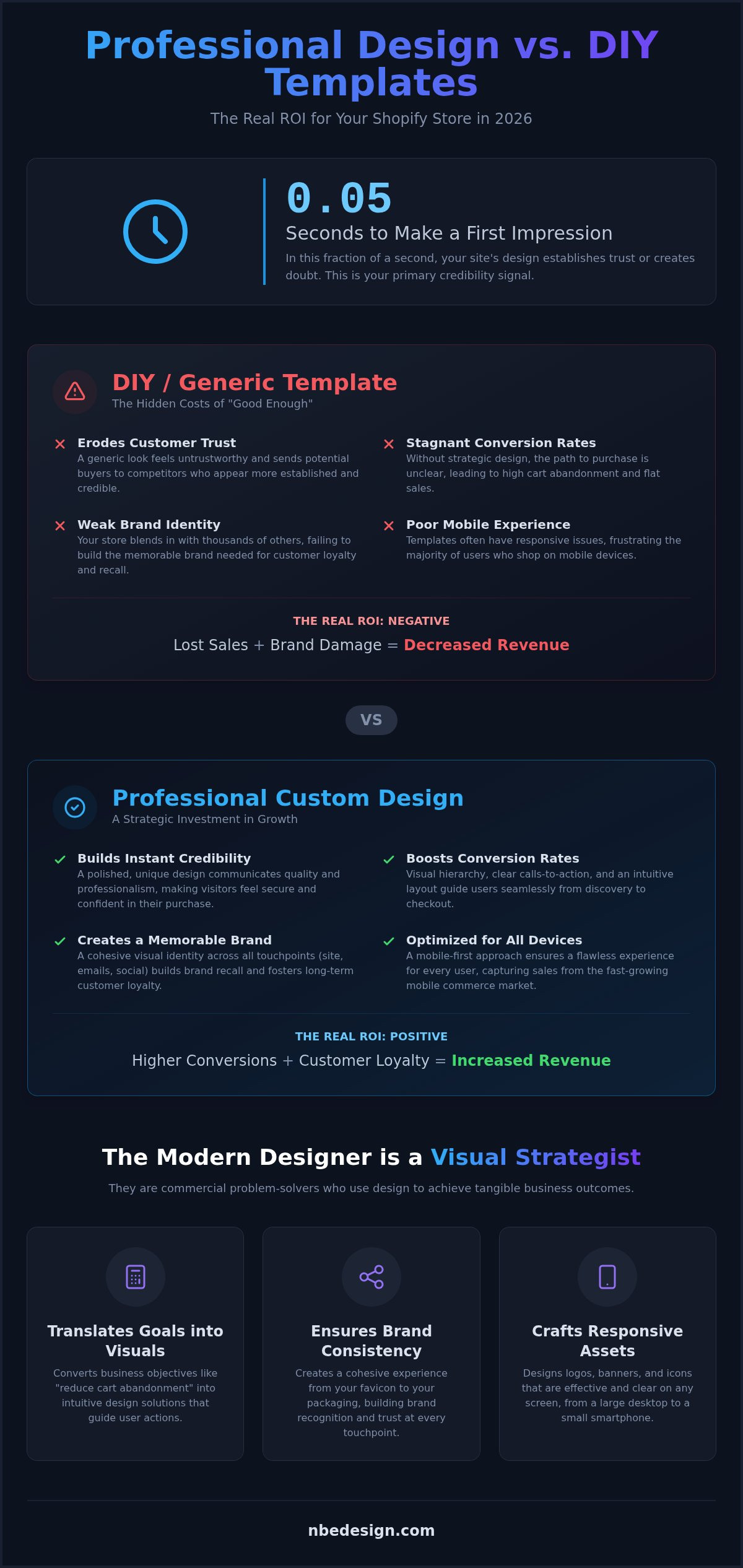
- Translating Goals into Visuals: They convert complex business objectives, like increasing average order value or reducing cart abandonment, into clear, intuitive visual assets that guide users towards a desired action.
- Ensuring Brand Consistency: From your website's favicon to your email marketing templates and packaging, a designer ensures every touchpoint feels cohesive, building trust and brand recognition.
- Crafting Responsive Assets: They create logos, banners, and icons that are clear and effective across all devices, from a large desktop monitor to the smallest smartphone screen.
Visual Communication vs. Art
It's vital to distinguish between subjective art and objective design. While art is created for expression, design is a functional tool created to achieve a specific result. An e-commerce designer doesn't choose a colour because they like it; they choose it because data suggests it converts better. This is where strategic business graphic design provides immense value, using data and established principles to create visuals that don't just look good-they perform.
The eCommerce Impact: Why Shopify Stores Need Professional Graphic Design
In the fast-paced world of online retail, you have just 0.05 seconds to make a good first impression. In that fraction of a second, before a visitor reads a single word, they form an opinion based on your site's design. This visual judgment is your primary trust signal. A professional, cohesive design communicates credibility and quality, while a generic or disjointed look can create doubt and drive potential customers away. This is where a skilled graphic designer becomes a critical investment, turning your Shopify store from a simple template into a conversion-focused sales engine.
While a standard Shopify theme provides a solid foundation, it's the professional touch that differentiates a market leader from the competition. A designer's expertise lies in customising that foundation to align perfectly with your brand, optimising every visual element-from product page layouts to checkout buttons-to guide users, reduce friction, and ultimately increase sales.
Designing for the Shopify Ecosystem
A specialist understands that designing for Shopify is more than just aesthetics; it's about function. With the mobile commerce market set to dominate by 2026, a mobile-first design approach is non-negotiable. This involves creating custom assets for Shopify's unique sections, crafting compelling banners for promotions, and ensuring a seamless experience on any device. A Shopify expert UK doesn't just create images; they integrate design with platform functionality to build a streamlined, intuitive, and future-proof storefront.
Brand Identity and Customer Loyalty
Your brand is the emotional connection you build with your audience, and graphic design is its language. Through strategic visual storytelling, a designer crafts a cohesive identity that resonates with your target customer. This includes:
- Professional Logo and Typography: Creating a memorable logo and selecting consistent fonts that enhance brand recall.
- Consistent Visuals: Ensuring all assets, from social media graphics to email templates, share a unified look and feel.
- Streamlined Path to Purchase: Using visual cues and a clear hierarchy to make navigation effortless, reducing cart abandonment.
This consistency builds trust and simplifies the customer journey, encouraging repeat business and fostering long-term loyalty. The ability to translate a brand's essence into a functional digital experience is a core competency, as detailed in resources like the official Graphic Designer Occupational Outlook, which outlines the specialised skills required for this profession.
Professional Design vs. DIY Templates: Calculating the Real ROI
In today's e-commerce landscape, DIY design tools like Canva are incredibly accessible. Many new business owners ask, "Why hire a professional when I can use a template for a fraction of the cost?" While templates can be a starting point, relying on them long-term is a false economy that can quietly erode your brand's potential and profitability.
The initial saving of a few hundred pounds on a template can lead to significant hidden costs down the line. A professional graphic designer provides more than just a pretty layout; they deliver a strategic asset. The real return on investment (ROI) isn't just in aesthetics, but in measurable performance improvements that compound over time.
Consider the hidden drawbacks of a "cheap" design approach:
- Brand Dilution: Your store looks like countless others using the same template, making it impossible to build a memorable, unique brand identity. This is especially damaging for a creative niche business like Embroidery n Sewing, which relies on a distinct visual appeal.
- Poor Performance: Generic templates often contain bloated code or unoptimised elements that slow down your site, directly harming conversion rates and SEO.
- Wasted Ad Spend: When you run paid social or Google Ads, you're paying for every click. Generic, uninspired creative leads to lower click-through rates and higher customer acquisition costs. Professionally designed assets are crafted to convert, making your ad budget work significantly harder.
This principle of unique branding isn't limited to online retail. Even a highly specialized, location-based service business needs a strong visual identity to convey expertise and trustworthiness. For instance, a reputable garage like Euro Performance Auto Shop LLC uses professional branding to stand out and attract owners of premium European vehicles, proving that strong design is a universal business asset.
The Trust Factor in eCommerce
High-quality, bespoke design is a powerful signal of legitimacy. It builds subconscious trust from the moment a visitor lands on your site. A polished, professional storefront reassures customers that your business is credible and secure, making them far more likely to share their credit card details. This confidence often correlates with a higher Average Order Value (AOV), as trusted brands encourage more confident purchasing decisions.
For businesses ready to move beyond generic templates, it can be helpful to explore Custom Website Design to see how an experienced agency approaches building a unique brand identity from the ground up.
Technical Precision and Performance
Beyond the visuals, a skilled graphic designer brings critical technical expertise. A key part of the professional Graphic Designer Role and Outlook is ensuring assets are technically sound for all applications. For a Shopify store, this means meticulously optimising image sizes to protect site speed and improve Core Web Vitals. They also ensure visuals meet accessibility standards (WCAG), reducing legal risks and making your site usable for everyone. Finally, they provide future-proof, scalable source files, giving you a rock-solid foundation to grow your brand across any channel.
How to Hire the Right Graphic Designer: A 2026 Vetting Framework
Securing the right creative talent is less about luck and more about a structured process. To ensure your investment translates into tangible growth, use this framework to vet and hire a professional who truly understands the demands of modern eCommerce.
Step 1: Define Your Specific Needs
First, clearly define your requirements. Are you launching a new brand and need a complete identity suite, from logo to brand guidelines? Or do you require ongoing support for dynamic marketing assets like email campaigns, social media graphics, and promotional banners? Distinguishing between a one-off project and a long-term partnership will help you target the right type of graphic designer. For businesses seeking integrated support that combines branding with social marketing and digital strategy, partnering with a dedicated agency like Buzz Media LTD can provide a more comprehensive solution.
Step 2: Review Portfolios with a Commercial Eye
A portfolio should be more than a collection of beautiful images; it should be a showcase of business solutions. Look for tangible results and case studies over purely conceptual mockups.
What to Look for in a Design Portfolio
A strong portfolio demonstrates an understanding of commercial goals. When reviewing, look for evidence of real-world results that drove business outcomes. For an online store, reviewing a portfolio of Shopify experts can reveal a track record of proven eCommerce success. Also, check for versatility-a designer who maintains brand consistency across web, social media, and email is an invaluable asset.
Step 3: Test for Communication and Business Acumen
The interview is your chance to gauge a designer's strategic thinking. The right questions move the conversation from aesthetics to outcomes, revealing if they will be a true partner in your business's growth.
Essential Interview Questions for Business Owners
- "How do you measure the success of your designs beyond aesthetics?"
- "Can you walk me through your process for handling feedback and revisions?"
- "How do you ensure your designs are optimised for mobile conversion?"
Step 4: Check for Platform-Specific Expertise
Finally, verify platform-specific expertise. A brilliant creative unfamiliar with the nuances of Shopify, for example, might create designs that are difficult to implement or not optimised for the platform's features. A designer with direct experience on your eCommerce platform will deliver work that is not only visually compelling but also technically sound and built to convert.
Partnering for Growth: How NB eCommerce & Design Bridges the Gap
A stunning e-commerce site that fails to convert is just as problematic as a functional store with a weak brand identity. True online growth happens at the intersection of powerful technology and compelling design. At NB eCommerce & Design, we bridge this gap by integrating our deep, technical Shopify development skills with high-end, strategic graphic design. This unique fusion is the core of our "Local Expert, Global Reach" approach. Based in the heart of the North East, we empower businesses in Darlington, Newcastle, and beyond to not just compete, but to thrive on a global stage.
The difference lies in understanding the complete retail ecosystem. A typical designer creates visuals; our team crafts brand experiences that are built to perform within the Shopify platform. The benefit of working with a graphic designer who also understands the nuances of Shopify POS, inventory sync, and sales channels cannot be overstated. It ensures your branding is consistent from your online checkout to your brick-and-mortar till, creating a seamless and efficient operation that supports your growth.
The NB Design Process: Reassuring and Professional
We know that commissioning a new website or a brand refresh can feel like a daunting task. Our process is designed to be reassuring, collaborative, and professional from start to finish. Having grown with Shopify since its inception in 2006, our platform knowledge is unmatched. We guide you from the initial concept and strategy sessions through to a meticulously planned, rock-solid launch, ensuring you feel confident and in control at every step.
Ready to Elevate Your Brand?
Investing in a professional visual identity is one of the most critical steps to future-proof your business. If you're ready to move beyond generic templates and build a scalable brand that truly connects with your customers, now is the time. A strategic partnership with an experienced e-commerce graphic designer is an investment in long-term success. Let's build a brand that not only looks exceptional but performs brilliantly. Contact our North East Shopify team today to start the conversation.
Secure Your 2026 eCommerce Success with Strategic Design
As we look towards 2026, it's clear the role of a professional graphic designer has evolved far beyond simple aesthetics. They are now essential strategic partners, tasked with building a brand that not only captures attention but also drives conversions and fosters lasting customer loyalty. For ambitious UK retailers, investing in professional, conversion-focused design is no longer a luxury-it is the critical component for scalable growth.
Navigating this landscape requires a partner with proven expertise. At NB eCommerce & Design, we have been Certified Shopify Experts since 2006, guiding businesses through the platform's entire journey. With a track record of dozens of successful UK migrations and a specialisation in conversion-focused retail design, we understand how to build a visual strategy that delivers a rock-solid return on investment.
Are you ready to elevate your brand and build a future-proof Shopify store? Book a consultation with our Shopify design experts today and let us help you build for sustained growth.
Frequently Asked Questions
What does a graphic designer actually do?
A graphic designer crafts the visual identity of your e-commerce brand. This goes beyond a simple logo; it involves creating a cohesive visual system across all customer touchpoints-from your website's banners and product imagery to your email campaigns and social media adverts. Their goal is to build brand recognition, establish trust, and ultimately create a professional look that encourages conversions and drives sales for your business.
How much does a professional graphic designer cost in the UK?
In the UK, costs vary based on experience and project scope. Freelance designers might charge between £30-£75 per hour, while established agency rates can start from £75-£150+ per hour. For a specific project, like a complete branding package, you might invest anywhere from £500 to over £3,000. It's crucial to focus on the value and return on investment, as strong, professional design directly impacts customer trust and sales growth.
What is the difference between a graphic designer and a web designer?
Think of it as aesthetics versus architecture. A graphic designer focuses on the visual identity: the logo, colour palette, typography, and imagery that make up your brand's look and feel. A web designer takes those visual elements and builds a functional, user-friendly website. While there's overlap, a web designer is more concerned with user experience (UX), navigation, and technical performance, whereas the graphic designer is the master of visual communication.
Do I need a graphic designer if I use a Shopify theme?
While a Shopify theme provides a fantastic starting point, a professional graphic designer helps you stand out from the thousands of other stores using the same template. They will craft custom banners, icons, and promotional graphics that align with your unique brand identity. This ensures your store doesn't look generic, building a stronger, more memorable brand that resonates with your target audience and fosters customer loyalty. A unique look is key to building trust.
How do I know if a graphic designer is good?
A strong portfolio is the clearest indicator. Look for work that aligns with your brand's aesthetic and, crucially, demonstrates experience in e-commerce. Do their designs look conversion-focused? Check for client testimonials and case studies that show tangible results. A good designer will also ask insightful questions about your business, audience, and goals. Their ability to understand your commercial objectives is just as important as their artistic skill.
Can a graphic designer help with my Shopify POS setup?
This is typically outside a designer's scope, as a Shopify POS setup is a technical task focused on hardware, software, and inventory management-something a Shopify Expert would handle. However, a designer can create branded assets for your customer-facing display, such as custom on-screen graphics or branded digital receipts. They ensure the visual experience in your brick-and-mortar store seamlessly matches your online brand, creating a cohesive omnichannel experience for customers.
What files should I expect from a graphic designer at the end of a project?
For a branding project, you should receive a comprehensive package. This must include vector files (.AI, .EPS, .SVG) for your logo, which are scalable for any use from print to web. You'll also need web-ready raster files (.JPG, .PNG) for your website and social media. A professional graphic designer will also provide a brand style guide-a document outlining your colour codes, fonts, and usage rules to ensure consistency across all your future marketing efforts.

- Posted in:
- Brand Identity
- Branding
- Conversion Rate Optimization
- eCommerce
- Graphic Design
- graphic designer
- Hire a Designer
- Shopify
- Shopify Design
- UK Retail