Skip to content
The Ultimate Shopify Store Branding Guide for 2026
-
3391 words · 16 min read

Your Shopify store's visual identity is either your strongest sales tool or your biggest conversion killer. In a market where consumers make split-second decisions about credibility, following a comprehensive shopify store branding guide isn't just a luxury; it's a requirement for growth. You've likely felt the frustration of a brand that feels fragmented across different platforms. Perhaps your social media aesthetic is vibrant, but your website feels like a generic template, or your physical shop's unique atmosphere doesn't translate to your digital checkout. This inconsistency does more than just look messy. It actively erodes customer trust and makes it difficult for shoppers to recognise your value.
We'll show you how to build a cohesive, conversion-focused identity that unifies your online and offline retail presence into one seamless experience. This article provides the clear, actionable framework you need to bridge the gap between your various sales channels. You'll learn how to align your visual assets and implement a design strategy that allows you to scale while looking as polished as top-tier competitors. We'll explore the specific steps to foster deep customer loyalty through a professional, trustworthy brand that performs as well as it looks.
Key Takeaways
- Understand how professional branding reduces cart abandonment by building immediate credibility and trust with your customers.
- Learn to design visual assets, including logos and colour palettes, that remain consistent across your website and physical Shopify POS receipts.
- Follow this shopify store branding guide to conduct a comprehensive brand audit and clearly document your mission and core values.
- Discover how to craft a unique brand voice that resonates specifically with your UK customer base across product descriptions and your About Us page.
- Create a unified retail experience by aligning your physical storefront with your digital presence to ensure long-term customer loyalty.
Why Your Shopify Store Branding is the Foundation of Your Success
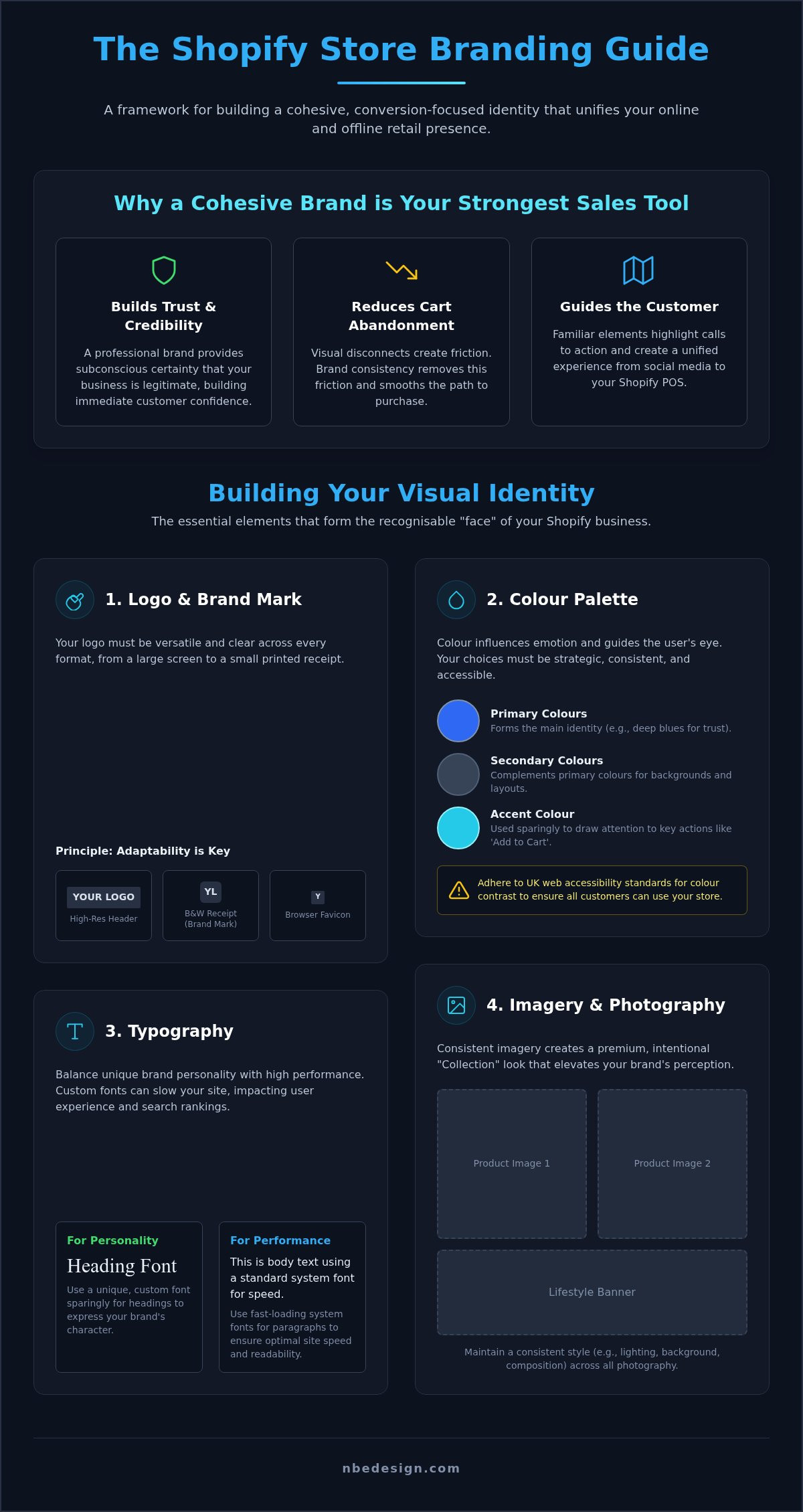
Branding is the pulse of your retail operation. It goes far beyond a simple logo or a chosen colour palette; it's the total corporate identity that communicates your values to every visitor. This shopify store branding guide focuses on creating a cohesive system rather than just a collection of visual assets. Your brand identity is the soul of your business, while your brand guidelines act as the rulebook that keeps that soul visible across every touchpoint. Retailers in 2026 must prioritise "Experience Branding." This approach focuses on how a customer feels during their interaction with your store, ensuring the digital journey is as intentional as a physical shop's atmosphere.
The Link Between Professional Branding and Conversion Rates
Consistency builds confidence. When a shopper moves from a social media advert to your product page, any visual disconnect creates friction. This friction is a primary driver of cart abandonment. Professional branding acts as a silent guide, using familiar elements to highlight your primary calls to action and streamline the path to purchase. By maintaining a uniform look, you reassure the customer that they're in the right place. Brand Trust in e-commerce is the customer's subconscious certainty that your business is legitimate, reliable, and capable of fulfilling its promises based on the quality and consistency of your digital presence.
Shopify-Specific Branding: Why Platform Expertise Matters
The Shopify ecosystem has unique technical requirements that generalist designers often overlook. Working with a certified Shopify Expert ensures your brand translates perfectly into a mobile-first environment. It's not enough to look good on a desktop; your identity must remain intact on a five-inch screen without compromising loading times. Choosing the right theme is a critical part of this process. You need a foundation that supports your visual identity while maintaining the performance standards required for high search rankings. If you're currently looking for a partner to help with this transition, our Shopify Web Design Agency: A Complete Guide provides a detailed roadmap for finding the right expertise.
Building Your Visual Identity: Essential Elements for Shopify
Your visual identity acts as the "face" of your business. A robust shopify store branding guide ensures this face is recognisable whether it appears on a tiny browser favicon or a physical receipt handed over in-store. Designing a logo for Shopify requires extreme versatility. It must be legible as a high-resolution header image and still look crisp when printed in black and white on a Shopify POS thermal printer. If your logo is too intricate, it may lose its impact at smaller scales, which is why many modern retailers opt for a simplified "brand mark" alongside their full wordmark.
Selecting a colour palette is a strategic decision that influences the emotional response of your audience. For example, deep blues often evoke trust and security, while vibrant oranges can suggest energy and affordability. These choices should be documented clearly to ensure every marketing asset feels like it belongs to the same family. If you need assistance in crafting these assets, our Business Graphic Design Services provide the professional expertise needed to build a cohesive visual system.
Typography and Colour Palettes for High-Performance Stores
In the UK, web accessibility standards require specific contrast ratios to ensure all customers can navigate your store easily. Choosing accessible colours isn't just a legal consideration; it's a way to ensure you don't alienate potential shoppers. Typography also plays a dual role in branding and performance. While custom fonts offer a unique personality, they can significantly slow down your site's loading speed. We recommend using system fonts for body text and limiting custom fonts to headings. This approach maintains your brand's character while keeping your Shopify store fast and responsive. Use "Accent Colours" sparingly to draw the eye toward your primary calls to action, such as 'Add to Cart' buttons or newsletter sign-ups.
Imagery and Product Photography Standards
Consistency in imagery creates a "Collection" look that feels premium and intentional. Whether you prefer lifestyle banners or clean, white-background product shots, the lighting, framing, and editing style must remain uniform across every page. This uniformity signals to the customer that they're buying from a professional operation rather than a hobbyist. Don't overlook the technical side of branding; every image should include descriptive alt-text and standardised file names. This practice supports both accessibility and your SEO strategy, ensuring your branded images are discoverable in search results. If you're ready to elevate your store's visual presence, you can contact our design team to discuss a tailored branding strategy.
Defining Your Brand Voice for the Shopify Ecosystem
Your visual identity might capture a visitor's attention, but your brand voice is what builds a lasting relationship. While the previous sections of this shopify store branding guide focused on what customers see, this section addresses how your brand "sounds" in their minds. A well-defined voice ensures that every interaction, from a playful product description to a formal order confirmation, feels like it's coming from the same reliable source. For UK retailers, this messaging is a critical component of experience branding, turning a simple transaction into a memorable interaction that encourages repeat business.
Crafting a Tone that Resonates with Your UK Audience
The UK retail landscape requires a delicate balance between professional authority and approachable charm. Many successful brands in the North East and across the country find success by leanng into a "local expert" persona. This approach feels grounded and trustworthy, avoiding the overly aggressive sales language often found in US-centric marketing. To build local relevance, you must be meticulous with your vocabulary. Use "delivery" instead of "shipping" where possible, and ensure your spelling always adheres to UK conventions. This attention to detail signals to your audience that you understand their specific needs and cultural context, which is essential for building long-term loyalty.
Injecting personality into your "About Us" page and product descriptions is where your brand truly comes to life. Instead of listing dry technical specifications, tell a story about how the product fits into the customer's lifestyle. Use your brand's unique perspective to solve problems and answer questions before they're asked. This proactive communication reduces anxiety and positions you as a supportive guide rather than just a faceless vendor.
Consistency Across Shopify Notifications and SMS
A common mistake is neglecting the automated touchpoints that follow a sale. Your brand voice shouldn't disappear once a customer reaches the checkout. Transactional emails, such as order confirmations and shipping updates, are some of the most opened messages you'll ever send. Customising these templates ensures the "Experience Branding" remains intact until the parcel arrives at the door. You can use Shopify Flow to personalise these interactions further, sending messages that align with your core values based on the customer's purchase history. For more insights on how these small details impact your bottom line, see The Ultimate Guide to Conversion Rate Optimisation.
Finally, don't forget the Shopify Checkout itself. While this area has specific layout constraints, you can still apply your brand's colours and logo to ensure a seamless transition from the storefront. A branded checkout reduces the "bait and switch" feeling that occurs when a user is suddenly redirected to a generic-looking payment page. By maintaining your voice and visual style through the final click, you reinforce the trust you've worked so hard to build throughout the user journey.
Unified Branding: Connecting Your Online Store and Shopify POS
Many retailers treat their online presence and physical shop as two separate entities. This is a mistake. A truly effective shopify store branding guide must account for the physical touchpoints where customers interact with your products in person. Whether you operate a permanent boutique or a temporary pop-up, the visual cues and messaging should be indistinguishable from your digital storefront. This consistency reinforces the "Experience Branding" we've discussed, ensuring that the trust built online carries over to the physical world. When a customer walks into your shop, they should recognise the atmosphere immediately based on their experience with your website.
Shopify POS isn't just a tool for inventory management; it's a powerful branding asset. You can customise your printed and digital receipts to include your logo, social media handles, and a personalised thank-you message that matches your brand voice. Even the customer-facing display on your tablet or POS terminal should use your primary brand colours and imagery. These small details reassure the customer that they're dealing with a professional, unified business. Training your staff to deliver a brand experience that mirrors your online persona is equally important. If your website is authoritative and knowledgeable, your in-store team should reflect those same traits during every interaction.
The Role of Branding in Physical Retail and Pop-Ups
For retailers in Darlington, Newcastle, and across the North East, bridging the gap between clicks and bricks is essential for building local loyalty. Use cohesive signage and branded packaging to reinforce your identity at every stage of the purchase. This unified approach is particularly vital for the success of "Buy Online, Pick Up In-Store" (BOPIS) services. When a customer arrives to collect an order, the physical environment must validate their online purchase. If you want to see how these systems work in person, we offer Shopify POS Demos in the North East to help you visualise a seamless retail setup.
Maintaining a Cohesive Experience Across Social Channels
Your brand doesn't stop at your URL or your front door. Syncing your Shopify "Shop" on Instagram and Facebook with your core assets ensures a seamless transition for social shoppers. Every influencer partnership or social media post should align with your established brand guidelines to maintain credibility. Inconsistent branding across these platforms creates confusion and can lead to lower conversion rates. For a deeper dive into how to bring these channels together, read our Shopify POS: The Ultimate Guide to Unifying Your Store.
Aligning your digital and physical branding can feel like a complex technical transition. We're here to act as your trusted guide, making the process manageable and low-stress. You can get in touch with our expert team to discuss how we can unify your retail presence and help your business grow.
How to Create and Implement Your Shopify Brand Guidelines
Establishing a shopify store branding guide requires a methodical approach to ensure your retail identity remains sharp and effective. This process prevents "brand drift," which occurs when your messaging or visuals slowly diverge from your original intent over time. By following a structured implementation plan, you can maintain a professional image that supports long-term growth and customer trust. A well-documented guide acts as a single source of truth for your entire team, ensuring consistency whether they're updating a product page or serving a customer in-store.
- Step 1: Conduct a brand audit. Review every touchpoint, from your social media profiles to your Shopify checkout. Identify any inconsistencies in colour, tone, or imagery that could confuse your customers.
- Step 2: Document your core values. Clearly define your mission and target audience. These foundational elements should dictate every visual and verbal choice you make.
- Step 3: Formalise your assets. Compile your logos, fonts, and brand voice rules into a comprehensive "Brand Bible." This document should be easily accessible to anyone creating content for your store.
- Step 4: Update your Shopify settings. Apply your branding to your theme settings, automated notifications, and Shopify POS assets. This ensures the "Experience Branding" we've discussed is active across all channels.
- Step 5: Review and evolve annually. The retail landscape in 2026 moves quickly. Schedule a yearly review to ensure your branding still resonates with your audience and reflects your current business goals.
The Essential Checklist for Your Brand Style Guide
A professional style guide must include specific rules to remain functional. Start with logo usage, defining the necessary "clear space" around your mark and setting a minimum size for digital and physical use. This is particularly important for Shopify POS receipts, where a logo must remain legible even when printed in a monotone variant. Your typography section should outline a clear hierarchy, specifying which fonts are used for H1 headings, H2 subheadings, and body text. Finally, establish imagery standards. Include "Never Use" examples to steer your team away from off-brand styles, such as overly staged stock photos or inconsistent lighting.
Working with a Certified Shopify Expert to Refine Your Brand
While DIY branding can get you started, scaling a business often requires a more sophisticated approach. There comes a point where generic templates no longer suffice, and you need a bespoke identity that truly reflects your market position. As a certified Shopify Expert based in Darlington, NB eCommerce & Design helps retailers in the North East and beyond bridge this gap. We specialise in creating conversion-focused identities that unify your online and offline presence. To see how we've helped other businesses achieve a professional look, you can view our portfolio of Shopify Experts work.
If you're ready to move beyond basic templates and build a brand that scales, we're here to act as your trusted guide. Our team understands the technical nuances of the Shopify ecosystem and can help you implement a shopify store branding guide that performs. You can contact our expert team today to discuss your project and learn how we can support your retail growth.
Secure Your Brand's Future in the 2026 Retail Landscape
A professional shopify store branding guide is the difference between a generic shop and a thriving retail destination. We've explored how unifying your visual identity across your website and Shopify POS builds immediate trust. By crafting a unique brand voice and documenting clear guidelines, you ensure that every customer interaction feels intentional and reliable. This consistency doesn't just look better. It actively reduces cart abandonment and fosters long-term loyalty in an increasingly competitive market. Your brand is your most valuable asset, and protecting its integrity across every channel is essential for growth.
As Certified Shopify Partners and Expert Shopify POS Integrators, we understand the technical complexities of these transitions. Based in the North East of the UK with global experience, we act as a trusted guide to help you bridge the gap between digital and physical storefronts. Ready to elevate your retail brand? Contact our UK Shopify Experts today for a professional design consultation. We're here to help you turn your vision into a cohesive, high-performing reality that stands out from the competition.
Frequently Asked Questions
What are Shopify brand guidelines and why does my store need them?
Shopify brand guidelines are a set of rules that define your store's visual and verbal identity. They ensure consistency across every touchpoint, from your website header to your physical receipts. Without these rules, your brand can become fragmented, which confuses customers and erodes trust. A documented shopify store branding guide acts as a roadmap for your team, allowing you to scale your business while maintaining a professional and recognisable presence.
How much does it cost to have professional branding designed for Shopify?
The cost of professional branding varies based on the scope of the project and the level of expertise required. Factors such as the number of visual assets, the complexity of your brand voice, and whether you require custom Shopify POS integration will influence the final investment. It's best to view branding as a long-term asset that drives revenue rather than a simple expense. Professional design provides a foundation for growth and improved customer recognition.
Can I change my Shopify store branding without losing SEO rankings?
You can update your branding without damaging your SEO, provided the technical implementation is handled correctly. If your rebrand involves changing URLs or site structure, you must implement proper 301 redirects to maintain authority. Visual changes, such as new colours or logos, generally don't impact rankings. However, ensuring your new images have optimised alt-text and that your site speed remains fast is essential for preserving your search visibility throughout the transition.
How do I ensure my branding is consistent between my online store and Shopify POS?
Consistency is achieved by applying your core visual assets to both your digital theme and your POS settings. You should customise your printed and digital receipts with your official logo and brand colours. Additionally, using customer-facing displays that feature your brand's imagery creates a seamless transition for shoppers. Training your in-store staff to use the same tone of voice found on your website further unifies the online and offline experience for your customers.
What is the most important element of a Shopify store branding guide?
The most critical element is consistency across all platforms. While a logo or colour palette is important, the way these elements work together to create a cohesive experience is what builds trust. A well-crafted shopify store branding guide ensures that your messaging and visuals remain uniform, whether a customer is browsing on a mobile device or visiting your physical storefront. This reliability is the foundation of long-term customer loyalty and brand recognition.
How often should I update my Shopify brand guidelines?
You should review your brand guidelines annually to ensure they still align with your business goals and market trends. While your core values may remain the same, visual elements or messaging might need minor refinements to stay relevant. A full rebrand is rarely necessary, but regular audits help prevent brand drift. This proactive approach ensures your store continues to look professional and resonates with your target audience as your retail business evolves over time.
Do I need a Shopify Expert to create my brand guidelines?
While you can create basic guidelines yourself, hiring a certified Shopify Expert provides a significant advantage. Experts understand the technical nuances of the platform, ensuring your branding works perfectly with theme settings and POS integrations. This professional insight helps you avoid common pitfalls, such as choosing fonts that slow down your site. A specialist agency can translate your vision into a conversion-focused identity that's built to scale effectively and look professional.
How does branding affect my Shopify store conversion rate?
Branding directly impacts your conversion rate by establishing immediate credibility and reducing customer anxiety. Professional visuals and a consistent voice signal that your business is legitimate and reliable. When customers feel secure, they're more likely to complete a purchase and less likely to abandon their carts. Clear branding also guides the user journey, making it easier for shoppers to find what they need and take action on your store with confidence.

- Posted in:
- Brand Identity
- Brand Strategy
- Branding
- Ecommerce
- Shopify
- Shopify Guide
- shopify store branding guide
- UK Business
- Visual Branding